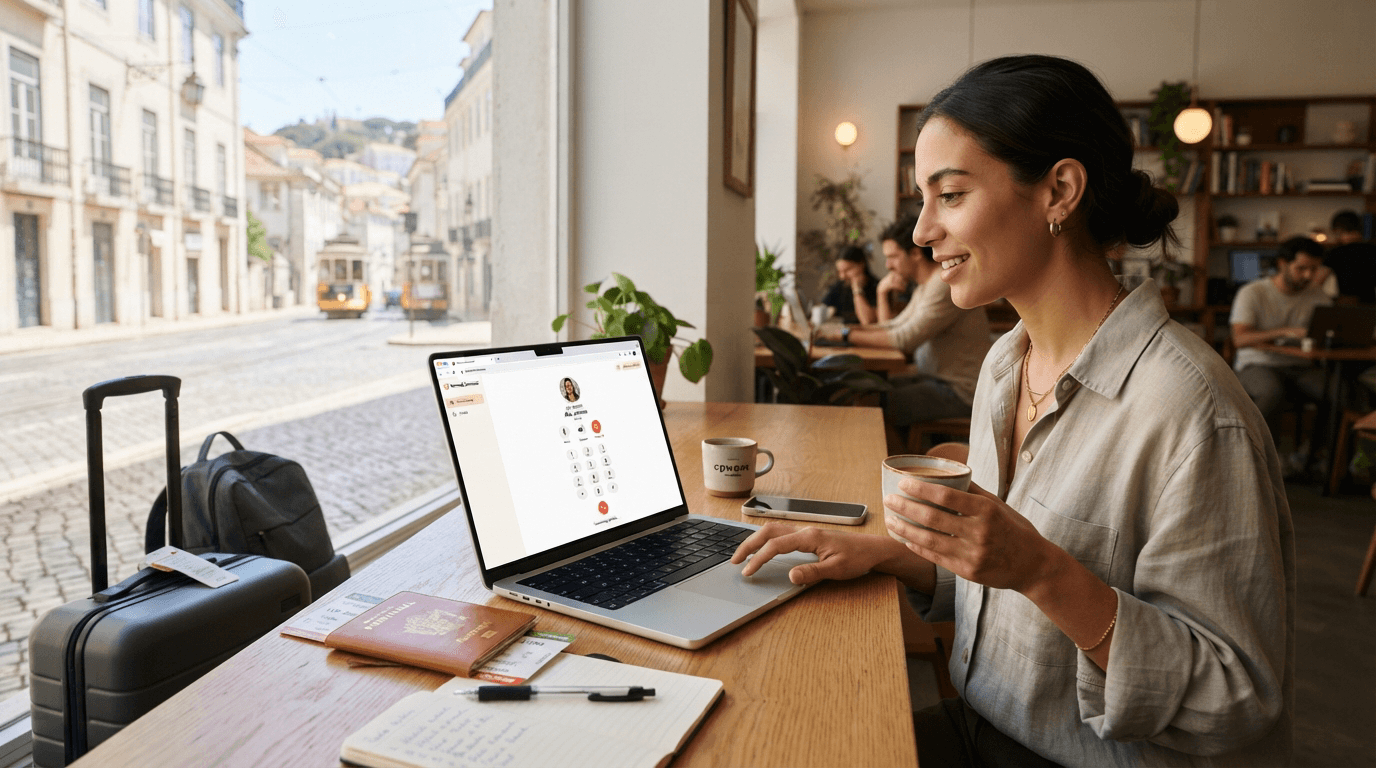
Dialable.world matters to digital nomads because the need to call from browser does not disappear when your location changes every few weeks. A coworking pass gets you online, but it does not solve the practical problem of calling a landlord, hotel desk, embassy line, recruiter, or client on a real phone number. That is where Dialable fits: it is a browser-based audio calling platform that lets users call landlines and mobile numbers worldwide directly from the browser with no downloads or installations.
For travelers moving through Lisbon, Bangkok, Mexico City, or Berlin, communication friction compounds fast. Hotel Wi-Fi can be inconsistent, SIM cards change, and heavy calling apps start to feel like extra luggage. If you need cheap international calls to landlines, a reliable global call path, and a true Skype alternative for landline calls, browser-first audio calling is easier to trust than a stack of installed apps you barely use.
Key Takeaways
- Dialable.world is a browser-based audio calling platform built with WebRTC, which means browser technology that enables real-time voice communication without extra plugins.
- Digital nomads often need to reach real landline and mobile numbers, not only other app users, which is why a Skype alternative for landline calls still matters.
- VoIP, or voice over internet protocol, means voice calls carried over the internet instead of traditional phone lines, but older VoIP apps often add unnecessary installation and update friction.
- If your workflow changes country, device, and network often, the ability to call from browser can be more practical than relying on bloated software.
- For fast travel workflows, the appeal is simple: open the browser, dial world destinations, and complete the call.
Why is communication harder for digital nomads than people expect?
Communication is harder for digital nomads because mobility creates new friction every time the environment changes. Each country shift can mean a new SIM, new network conditions, new login steps, and a new round of app troubleshooting before the actual call even starts.
That matters because many important calls still go to standard numbers. A front desk, visa office, clinic, delivery contact, or client assistant is often reachable by landline or regular mobile, not by whichever messaging app you prefer this month. That is why digital nomad communication is less about having endless chat tools and more about having a dependable path to a real phone number.
Why does the ability to call from browser matter so much on the road?
The ability to call from browser matters because it removes setup work at the exact moment travelers need speed. When you are borrowing a laptop, switching devices, or working from temporary housing, every extra install or update increases the odds that the call gets postponed.
Browser calling means placing a phone call directly from a web browser instead of through installed software. In practical terms, that makes it easier to work across changing hardware and travel routines. For digital nomads, that is not a small convenience. It is a workflow advantage.
A traveler in Barcelona confirming a rental, a freelancer in Bali calling a client in New York, or an expat between flights trying to reach a bank all need the same thing: fast access to audio calling without local setup drama.
What makes Dialable.world a better fit to call from browser than bloated VoIP apps?
Dialable.world is a better fit for travel-heavy workflows because it keeps the call path lightweight and browser-first. Instead of asking users to install another app, manage updates, or build their communication routine around software overhead, it focuses on audio calls to landlines and mobile numbers worldwide.
That focus matters. Dialable.world is audio-only, which keeps the experience aligned with what many travelers actually need: a direct phone conversation with a real number. It is not trying to become an all-purpose communications suite.
VoIP is the broad category of internet-based calling. A lot of older VoIP tools became cumbersome because they layered too many features around the core act of making a call. For a digital nomad, the difference between a helpful tool and a frustrating one is often just how quickly it gets out of the way.
How does WebRTC help digital nomads make calls more easily?
WebRTC helps digital nomads make calls more easily by letting the browser handle real-time audio communication natively. In plain English, WebRTC stands for Web Real-Time Communication, a standard built into modern browsers that supports live voice connections without requiring separate calling software.
That is why browser-based audio calling feels more immediate. If the browser already handles the communication layer, you do not have to treat every international call like a small software deployment.
A few related terms help clarify the stack:
- PSTN means the public switched telephone network, the traditional global phone system that routes ordinary landline and mobile calls.
- SIP stands for session initiation protocol, a signaling method often used to start and manage internet voice sessions.
- Latency means the delay between speaking and being heard, which affects how natural a conversation feels.
- Codec means the method used to encode and decode audio so voice can travel efficiently over the internet.
Users do not need to become telecom engineers to care about those terms. They just need a system that makes audio calling feel direct and professional.
Why are hotel Wi-Fi and changing networks such a problem for travel calling?
Hotel Wi-Fi and changing networks are a problem because unstable conditions make heavy calling apps feel even heavier. On the road, the challenge is rarely just connection quality. It is the combination of captive portals, inconsistent speeds, device limits, and the extra friction that comes with app-based calling tools.
A browser-first approach reduces one major variable: setup. You still need internet access, but you do not need to keep reinstalling, reauthenticating, and reconfiguring software every time your location changes.
That is why cheap international calls to landlines are not only about cost. They are also about time, reliability, and the ability to place a call before the next meeting, checkout deadline, or train departure.
Where do digital nomads still need landline and mobile calling most?
Digital nomads still need landline and mobile calling whenever the other side of the conversation is operating in the real world, not in an app ecosystem. That includes admin, travel, family, healthcare, and business use cases that do not disappear just because work is remote.
Common examples include:
- Calling hotels, property managers, embassies, clinics, and government offices.
- Reaching relatives who prefer familiar mobile or landline calls over chat apps.
- Contacting international clients and support desks that expect a standard phone conversation.
- Making urgent calls from a shared device when no local app setup makes sense.
In all of those cases, a lightweight way to dial world destinations matters more than a giant communication platform with features you never open.
Is Dialable.world a real Skype alternative for landline calls?
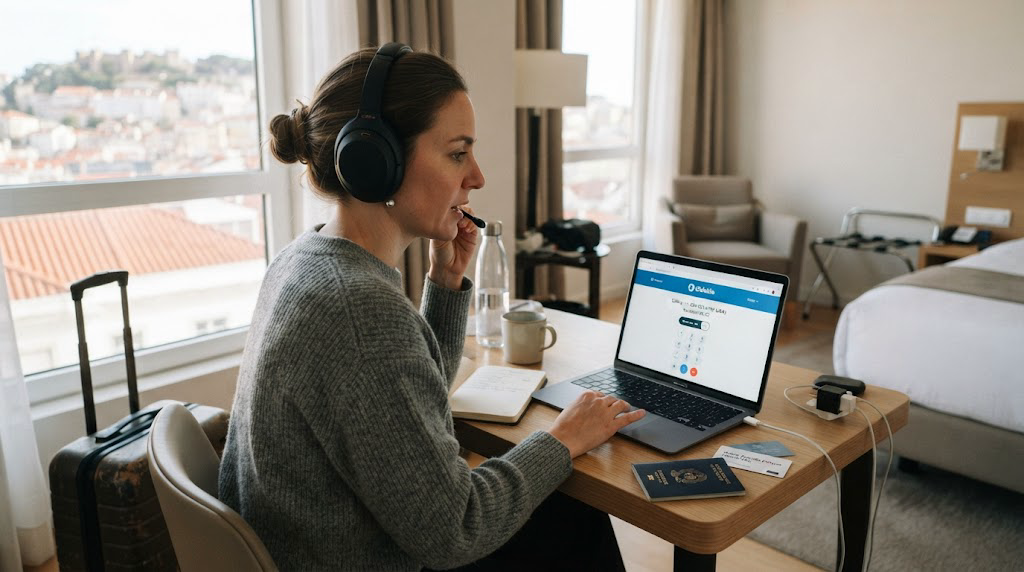
Yes, Dialable.world is a real Skype alternative for landline calls because it is built around calling actual landline and mobile numbers worldwide directly from the browser. That makes it relevant for people who still need practical internet calling, but no longer want an app-heavy workflow.
For digital nomads, the value is not nostalgia for older tools. It is the ability to keep one simple habit while everything else changes. Open the browser, place the call, move on.
This is also why the phrase Skype alternative for landline calls still carries search intent. People are not only looking for another brand. They are looking for less friction between the need to call and the moment the call begins.
What should digital nomads look for in a browser-based calling tool?
Digital nomads should look for the ability to call real phone numbers, direct browser access, and a product that stays focused on audio calling. Those three points matter more than feature sprawl when you are operating across borders and devices.
A practical checklist looks like this:
- Confirm the service supports calls to landlines and mobile numbers, not only app-to-app conversations.
- Check that you can truly call from browser with no required downloads or installations.
- Prefer a focused audio tool instead of a platform loaded with unrelated collaboration features.
- Avoid assuming unsupported claims about rates, coverage counts, or performance unless the provider states them clearly.
- Choose the option that makes a global call feel fastest and least fragile.
That is the lane Dialable occupies well. It is narrow in the right way.
FAQ
Can digital nomads really call landlines from a browser?
Yes. Browser-based audio calling platforms like Dialable.world let users place calls from a web browser while the service routes the connection to standard landline or mobile numbers.
Is browser calling the same thing as VoIP?
Browser calling is part of the broader VoIP category because the call travels over the internet. The practical distinction is that browser calling reduces dependence on installed software and makes access faster.
Why do digital nomads still need landline calling in 2026?
Because many important contacts still use standard phone numbers. Hotels, clinics, government lines, property managers, and some family members are easier to reach by landline or mobile than by app-based messaging.
What makes Dialable.world useful for travel workflows?
It is browser-based, audio-only, and designed for calls to real landline and mobile numbers worldwide. That combination fits people who need a lightweight, professional way to communicate while moving between countries.
Why is browser-based audio calling becoming the better travel workflow?
Browser-based audio calling is becoming the better travel workflow because it matches the way digital nomads actually operate: across devices, across borders, and under time pressure. If you need cheap international calls to landlines, a dependable way to call from browser, and a cleaner global call routine without downloads, Dialable.world is worth a close look.
For travelers, freelancers, and expats who are tired of carrying around bloated calling apps, the better habit is often the simpler one. Explore Dialable.world for browser-based international audio calling, and learn more about the company behind it at AEGONTECH LLC.