
If you've ever tried to reach a family member in Guadalajara, a supplier in São Paulo, or a bank's fraud line in Mexico City while sitting in a co-working space in Lisbon, you already know the drill: your carrier wants $2.49 a minute for the "international add-on," the hotel Wi-Fi throttles anything that isn't a browser tab, and the free calling app you downloaded insists the other person install it too before you can actually talk. Dialable solves that specific headache. Dialable.world turns any browser tab into a real phone call to a landline or mobile number in Mexico, Brazil, or nearly 200 other countries — no app, no SIM swap, no asking grandma to set up an account first. For the millions of people now living, working, and sending money across Latin America's two largest economies, the difference between a call from browser and a call that needs an app on both ends is the whole ballgame.
Mexico and Brazil are not niche calling destinations. Mexico is the single largest source of remittances to Latin America, and Brazil is the region's biggest economy and a growing hub for outsourced customer service, manufacturing, and agribusiness supply chains. Both countries also still run enormous volumes of calls through old-fashioned landlines and PSTN (the Public Switched Telephone Network — the same copper-and-fiber phone grid that has carried voice calls since before the internet existed) — bank branches, government offices, clinics, and small suppliers that have no WhatsApp Business account and no interest in getting one. If the person on the other end can't or won't install an app, your calling options collapse fast. That's exactly the gap Dialable is built to close.
Key Takeaways
- Dialable runs entirely in the browser using WebRTC (Web Real-Time Communication, the open standard built into Chrome, Firefox, and Safari that lets a webpage carry live audio without a plugin) — there is nothing to install on your device or the recipient's.
- It connects to real landlines and mobiles across Mexico and Brazil, not just other app users, because calls terminate on the standard PSTN.
- Typical carrier roaming rates for calls into Mexico or Brazil run $1.50–$3.00 per minute; Dialable's browser-based per-minute rates are a small fraction of that for most routes.
- No local SIM, no eSIM activation, no dual-SIM juggling — you dial world from whatever Wi-Fi or 4G connection you already have.
Why do so many calls to Mexico and Brazil still need a real phone number?
Despite booming smartphone adoption, both countries lean hard on voice infrastructure that predates the app economy. Mexican banks route fraud alerts and account verification through call centers that answer a landline number, not a chat widget. Brazilian government services — from the Receita Federal (tax authority) to state DMV equivalents — still expect a phone call to a fixed number for appointment confirmations. Small and mid-sized suppliers in both countries, especially outside the largest metro areas, often list only a phone number on their invoices, with no messaging app presence at all. A calling app that only reaches other users of the same app is useless here. Dialable's value is narrower and more useful: it is a Skype alternative for landline calls, built for exactly the calls that VoIP-only chat apps can't complete.
What does it actually cost to call Mexico or Brazil the old way?
Run the math on a single trip. A U.S. traveler on a standard carrier plan without an international package pays roughly $2.00–$3.00 per minute to call a Mexican number while roaming, and Brazilian rates land in a similar range once you factor in "international calling" surcharges layered on top of a domestic plan. A twenty-minute call home, or to sort out a wire transfer with a bank, can run $40–$60 before you've said goodbye. Even a modest international add-on package — often $10–$15 a month — assumes you'll stay under a bucket of minutes that evaporates fast once you're coordinating a move, a remittance, or a family emergency. Cheap international calls to landlines shouldn't require a new subscription plan every time you cross a border, and with a browser-based service they don't: you top up, you dial, you talk, and the connection ends when the call does.
How does the call quality compare to a standard mobile connection?
Voice quality depends on codec choice (the algorithm that compresses and reconstructs audio for transmission) and network latency (the delay between speaking and being heard on the other end). Modern WebRTC implementations use wideband codecs that, on a stable broadband or 4G/5G connection, sound clearer than a compressed cellular roaming call — carriers frequently downgrade call quality abroad to conserve roaming bandwidth. Latency on a good connection typically sits in the 100–200 millisecond range, low enough that conversation flows normally; it's the same order of magnitude as a standard mobile call, not a satellite-delay experience. Weak hotel Wi-Fi or a congested airport network is still the real culprit behind bad calls — the browser and the calling infrastructure are rarely the bottleneck.
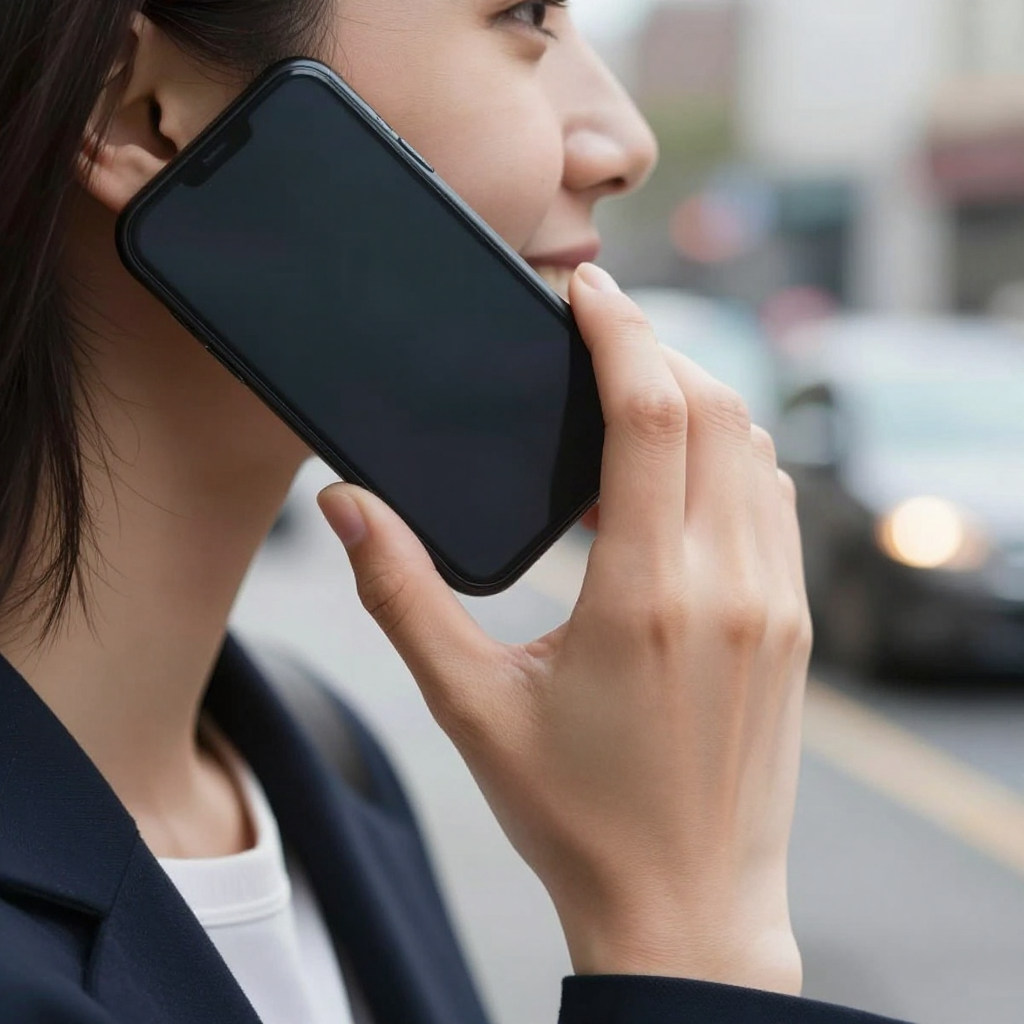
Dialable vs. Skype, WhatsApp, and Google Voice for calling Mexico and Brazil
None of the well-known "free calling" apps solve the landline problem cleanly:
| | Reaches real landlines/mobiles | Requires app on both ends | Works with no local number | |---|---|---|---| | Dialable | Yes | No | Yes | | Skype | Only with a paid credit balance | No, but sign-up friction is high | Yes | | WhatsApp calling | No — app-to-app only | Yes, on both ends | N/A | | Google Voice | Yes, but requires a U.S. number and account setup | No | No — tied to a home-country number |
WhatsApp calling is genuinely free and popular across Brazil in particular, but it only works when the person you're calling already has the app open and connected — it cannot ring a bank's call center or a landline. Google Voice can dial out internationally, but it's built around having a U.S.-based number and account, which doesn't help a Mexican small-business owner calling a customs broker in Rotterdam or a Brazilian founder calling a supplier in Shenzhen. Dialable's pitch is simpler: pick up a browser, dial the number exactly as printed on the invoice or business card, and make the call — a genuine global call tool rather than a walled garden that only talks to itself.
Who actually needs this, day to day?
- Remittance senders and receivers. Confirming a transfer with a Mexican or Brazilian bank branch by phone, rather than trusting an app notification, is still common practice — and worth the clarity of a real conversation.
- Freelancers and small business owners sourcing from or selling into Mexico and Brazil, who need to reach suppliers, customs brokers, and clients whose only listed contact method is a phone number.
- Digital nomads and expats keeping in touch with family members who don't use — or don't trust — chat apps for anything beyond text.
- HR and recruiting teams doing phone screens with candidates across both countries' large outsourcing and remote-work talent pools, where a scheduled call to a personal mobile is still the norm.
FAQ
Do I need a Mexican or Brazilian SIM card to use Dialable? No. Dialable runs over your existing internet connection — home Wi-Fi, office broadband, a coffee-shop hotspot, or mobile data — and connects the call out to the PSTN on the receiving end. There's no local SIM, no eSIM profile to install, and no roaming agreement to activate.
Does the person I'm calling need to install anything? No. That's the core difference from app-to-app calling: Dialable dials a standard phone number, so it rings as an ordinary call on any landline or mobile phone, with nothing for the recipient to download or configure.
Is this the same as a video calling app like Zoom? No — Dialable is strictly audio-only voice calling, the same as a traditional phone call. There's no camera, no video grid, and no meeting link; it's built specifically to replace the phone call, not the video meeting.
Why is calling from a browser cheaper than my phone carrier's international rate? Carriers price international and roaming minutes as a premium add-on tied to their own cellular network. A browser-based call travels over standard internet data using WebRTC and only touches the traditional phone network at the very last leg, on the receiving end — cutting out most of the infrastructure carriers charge a premium for.
The bottom line
Mexico and Brazil are two of the most call-dependent markets in the world for exactly the situations where an app-only calling tool falls short: bank fraud lines, customs brokers, family members without smartphones, and government offices that still answer a fixed number. Dialable.world is built for that gap — a browser tab, a real phone number, and a connection that doesn't care whether the person on the other end has ever heard of WebRTC. For teams and individuals who need this kind of dependable, no-install calling infrastructure built into their own products, AEGONTECH LLC builds the underlying communication tooling that services like Dialable run on.

Next time a Mexican bank or a Brazilian supplier only lists a phone number, skip the SIM card aisle and the app store. Open a browser tab, dial world, and talk.