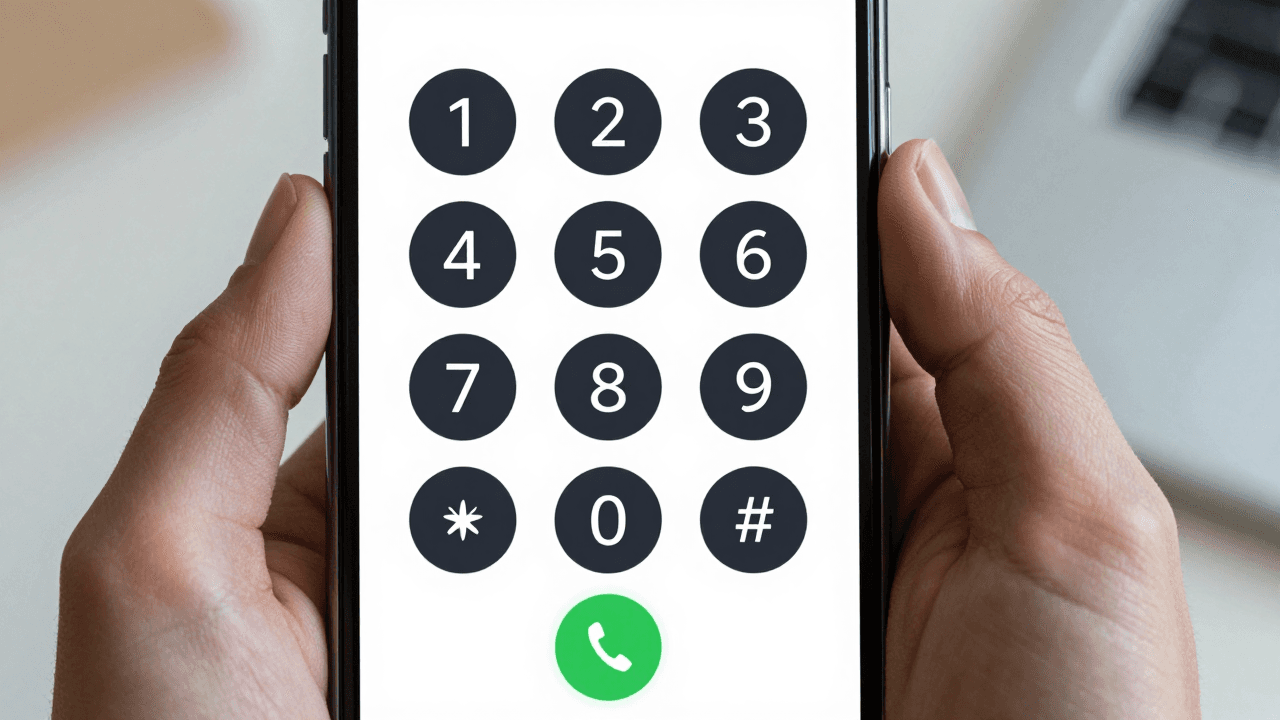
<p>It's Sunday evening in Lagos, which means it's still afternoon in Houston, and a daughter is trying to reach her mother before the weekly network congestion makes every call drop mid-sentence. She could top up an international calling card, wrestle with a bloated VoIP app that wants a phone number she doesn't have, or open <strong>Dialable</strong> in a browser tab and dial the Nigerian landline directly. For millions of people in the Nigerian and Kenyan diaspora — students, nurses, engineers, small-business owners scattered across the US, UK, Canada, and the Gulf — that Sunday call home is the one appointment they never miss, and it deserves a connection that doesn't fight them. Dialable.world exists for exactly this: cheap international calls to landlines and mobiles in Africa, made from whatever browser is already open.</p>
<p>Calling Nigeria or Kenya from abroad has historically meant choosing between three flawed options: a prepaid calling card that dies mid-conversation, a mobile carrier's per-minute international rate that turns a 20-minute catch-up into a real bill, or an app-based service that only works if the person on the other end has also installed it. None of those match how diaspora families actually communicate — the grandmother in Nairobi, the uncle in a village outside Enugu, the cousin managing a shop in Kisumu, rarely have a smartphone loaded with the same apps as the caller abroad. They have a phone number. Dialable is built around that one fact.</p>
<h2>Key Takeaways</h2>
<ul>
<li>Dialable calls any Nigerian or Kenyan landline or mobile number directly from a browser — no app, no SIM card, no account required on the receiving end.</li>
<li>It runs on WebRTC (Web Real-Time Communication), the browser technology that carries voice as encrypted data packets over the internet instead of a traditional phone circuit.</li>
<li>Rates to landlines in both countries are typically a fraction of carrier roaming or per-minute international plans — often under a few cents per minute versus $1–$3/minute roaming charges.</li>
<li>Because it works entirely in a browser tab, Dialable is usable from a work laptop, a library computer, or a phone browser — anywhere a login is possible but an app install isn't.</li>
<li>It positions itself as a practical Skype alternative for landline calls, since Skype's own consumer calling-out product was wound down and never dialed African landlines cheaply to begin with.</li>
</ul>
<h2>Why does calling home cost so much in the first place?</h2>
<p>Traditional phone calls, even international ones, still largely ride on the PSTN — the Public Switched Telephone Network, the century-old circuit-switched infrastructure that connects landlines and mobile towers worldwide. Routing a call from a US mobile carrier onto the PSTN in Lagos or Nairobi involves interconnection fees between carriers, regulatory surcharges, and thin competition on a handful of international gateway routes. The result: US carriers commonly charge $1 to $3 per minute to call Nigerian or Kenyan numbers without a specific international plan, and even "unlimited international" add-ons often exclude landlines or cap African destinations at premium rates. </p>
<p>VoIP — Voice over Internet Protocol, the general term for carrying voice calls over internet data instead of a phone circuit — broke that pricing model years ago for calls between two internet-connected devices. The catch was always the "last mile": the moment a VoIP call has to land on an actual landline or a mobile tower in Africa, someone still has to pay PSTN interconnection fees. Dialable's advantage is that it specializes in exactly that hand-off, buying termination routes into Nigeria and Kenya at wholesale rates and passing the savings to the caller, rather than treating Africa as an afterthought behind US and European routes the way many general-purpose apps do.</p>
<h2>How does a call from a browser actually reach a landline in Africa?</h2>
<p>When someone opens dialable.world and taps a number, the browser uses WebRTC to capture microphone audio, compress it with a codec — the algorithm that shrinks audio into a smaller data stream for transmission, then rebuilds it on the other end — and send it as encrypted packets across the internet to Dialable's servers. From there, the call is handed off via SIP, the Session Initiation Protocol that VoIP providers use to set up, route, and tear down calls between systems, onto a termination partner with a direct interconnect into Nigerian or Kenyan telecom networks. The person receiving the call sees a normal incoming call on their landline or mobile — no app, no notification to install anything, no idea any of this happened in a browser tab on the other side of the planet.</p>
<p>The practical result is what Dialable's own tagline gets at: dial world, meaning any number, anywhere, from the same interface. A user in Toronto can call a Lagos landline at 9am, a Nairobi mobile at noon, and a colleague in Berlin at 3pm without switching apps or SIM cards — it is one dial pad for every global call they need to make.</p>
<h2>What does latency actually feel like on these calls?</h2>
<p>Latency — the delay between someone speaking and the other party hearing it — is the number that determines whether an international call feels natural or frustrating. Satellite-routed calls, still common on some African rural routes, can run 500-600 milliseconds of round-trip delay, enough to cause the awkward talk-over-each-other rhythm anyone who has called a relative in a remote area will recognize. Fiber-backed VoIP routes, by contrast, typically land in the 150-250 millisecond range — noticeable but conversational. Dialable routes calls over modern fiber interconnects into both countries' major carriers, which is why calls to Lagos, Abuja, Nairobi, and Mombasa tend to sound closer to a domestic call than a call across an ocean.</p>
<h2>Dialable vs. the apps everyone already has</h2>
<p>The honest comparison isn't Dialable versus "doing nothing" — it's Dialable versus WhatsApp, versus Google Voice, versus what's left of Skype. WhatsApp calling is free and excellent, with one hard requirement: the other person needs a smartphone, a data connection, and the app installed. That works for a tech-savvy cousin; it does not work for an elderly parent on a basic landline in a village outside Kisumu, or a business contact who simply doesn't want another app. Google Voice, meanwhile, is built around a US number and gets progressively less useful once the "call home" direction reverses — outbound rates to Kenyan or Nigerian mobiles are not part of its free-calling footprint and get billed per minute like any carrier. Zoom, for its part, was never built for this at all: it's a video-and-conferencing tool, and dragging a simple voice check-in with grandma into a video-call interface solves a problem nobody in this scenario has.</p>
<p>Skype, historically, was the default answer for anyone needing to call landlines cheaply from a computer — until Microsoft began retiring the consumer Skype experience, pushing users toward Teams and leaving a real gap for people who just wanted to call from browser without installing anything. Dialable fills that gap directly: it's a Skype alternative for landline calls that keeps the one feature that mattered — dial any number, pay per minute, done — without the bundled chat platform nobody asked for.</p>
<p>A quick side-by-side on what matters for a Lagos or Nairobi call:</p>
<ul>
<li><strong>Requires app on receiving end:</strong> WhatsApp — yes. Dialable — no.</li>
<li><strong>Works on a plain landline:</strong> WhatsApp — no. Google Voice — yes, but at carrier-level per-minute rates. Dialable — yes, at wholesale rates.</li>
<li><strong>Typical cost per minute to a Nigerian landline:</strong> unmanaged carrier roaming — $1-$3. Dialable — a few cents.</li>
<li><strong>Setup required:</strong> WhatsApp and Skype — account, app download, contact sync. Dialable — open a browser tab. </li>
</ul>
<h2>Who actually needs this?</h2>
<p>Beyond the weekly family call, the same browser-based dial pad covers a surprising amount of diaspora life admin: confirming a delivery with a courier in Lagos who only answers a landline, calling a family doctor's office in Nairobi to relay test results, reaching a property manager about a family house back home, or coordinating a wedding or funeral with relatives who don't use smartphones. None of these calls justify installing a new app for a single conversation — they justify a tab that's already open.</p>
<h2>Frequently Asked Questions</h2>
<p><strong>Does the person I'm calling need Dialable, an account, or an app?</strong><br>
No. Dialable calls land as a normal incoming call on any landline or mobile number in Nigeria or Kenya. Nothing needs to be installed or configured on the receiving end.</p>
<p><strong>Do I need a Nigerian or Kenyan SIM card to make these calls?</strong><br>
No — that's the entire point. Dialable runs from any browser with an internet connection, so a laptop in London or a phone browser in Dubai can dial a Lagos landline without any local SIM, roaming plan, or calling card.</p>
<p><strong>Is call quality reliable, or does it depend on my home internet?</strong><br>
Call quality depends mainly on the caller's own internet connection and the termination route on the receiving end, not on any special hardware. A stable home wifi or 4G/5G connection is generally enough for a clear, low-latency call to a major Nigerian or Kenyan city.</p>
<p><strong>How is this different from just using WhatsApp calling for free?</strong><br>
WhatsApp calling is free but only works between two people who both have the app, a smartphone, and mobile data. Dialable is built for the other case — reaching an actual landline or a relative's basic mobile phone — which is a huge share of real calls to Nigeria and Kenya.</p>
<h2>Bringing the Sunday call home</h2>
<p>The diaspora experience is full of small frictions that add up: a calling card that runs out at the worst moment, an app the other person can't or won't install, a carrier bill that turns a family check-in into a budget decision. Dialable.world was built to remove exactly that friction — cheap international calls to landlines and mobiles in Nigeria and Kenya, made from a browser tab that's already open, with no SIM card and no app required on either end. <a href="https://www.aegontech.dev">AEGONTECH LLC</a>, the team behind Dialable, built it as infrastructure for the millions of people whose most important weekly call still has to reach a landline, not a chat app. Open dialable.world, dial the number, and let the call home sound like a local one for once.</p>