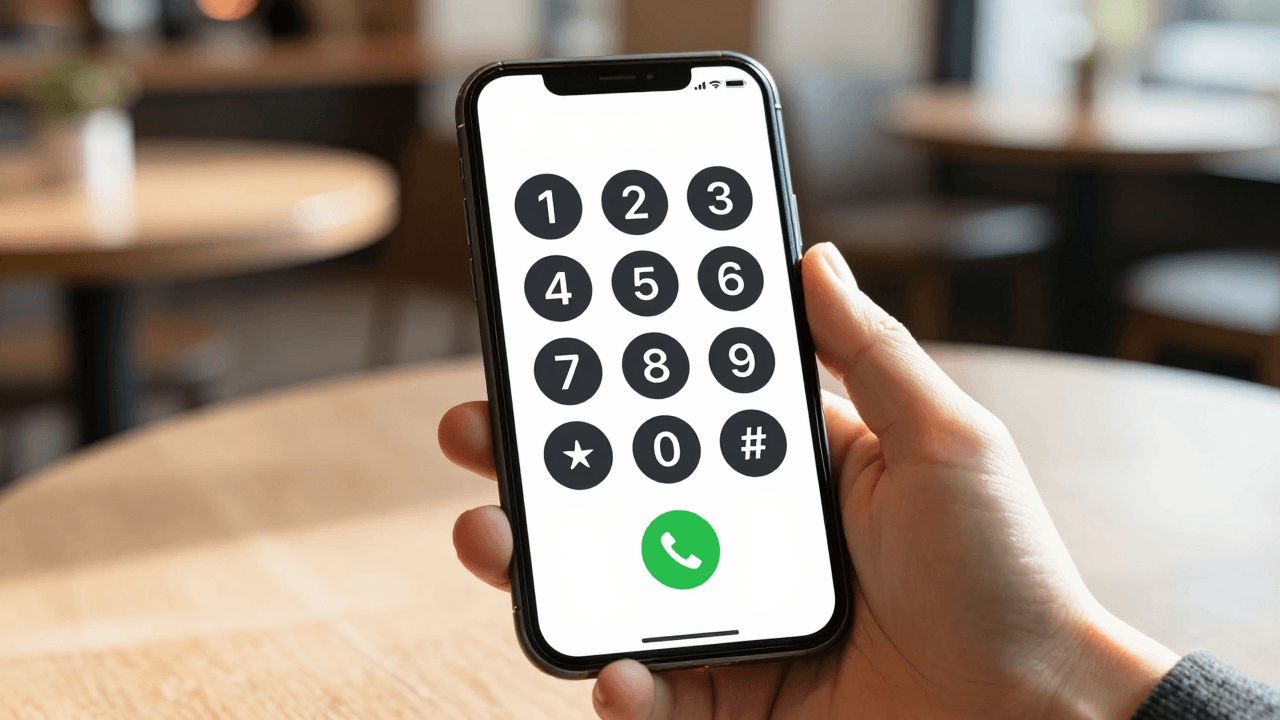
There are more than 10 million overseas Filipino workers scattered across the Gulf, East Asia, Europe, and North America, and a Vietnamese diaspora of similar scale sending remittances home every month. For almost all of them, the relationship that matters most — a parent, a child, a hospital, a bank back home — still runs through a phone call, not a chat app. That's the gap Dialable.world is built for: a browser-based, audio-only calling service that lets you ring any real landline or mobile number in the Philippines or Vietnam from a laptop or phone browser, with no SIM card, no app download, and no roaming plan.

Key Takeaways
- Overseas Filipino and Vietnamese workers routinely pay $0.30-$1.00 per minute for international carrier or roaming calls home — Dialable runs on a browser tab with no per-minute roaming markup.
- Dialable calls real PSTN numbers: a landline in Quezon City or a mobile in Ho Chi Minh City rings normally, no app required on the other end.
- It's audio-only by design — no camera, no video grid, just a clean voice call, which matters when calling an elderly parent, a rural landline, or a government office with no interest in a video app.
- Works on hotel wifi, office networks, and mobile data alike, since it's just a browser tab, not a dedicated VoIP app competing for bandwidth.
Why Do Millions of Filipino and Vietnamese Families Still Rely on Phone Calls?
Messaging apps solved a lot of problems, but they didn't solve this one: the person on the other end — a parent in Cebu, a grandmother outside Da Nang, a landlord, a clinic receptionist, a remittance agent — often doesn't have a smartphone loaded with the same app you do, or doesn't have a reliable data connection to run it. A phone call, placed to an ordinary number, still works when nothing else does. For the outsourced customer-support and BPO teams that the Philippines is famous for, the same logic applies in reverse: agents calling U.S. or European clients need a real number that shows up as a legitimate call, not a video-chat invite the recipient has to accept.
What Makes Calling the Philippines and Vietnam So Expensive With Traditional Carriers?
Most mobile carriers charge international roaming or long-distance rates that run anywhere from $0.30 to over $1.00 per minute to reach a Philippine or Vietnamese number, and that's before hotel-phone markups, which can run several dollars a minute. eSIMs help with data, but voice minutes on a local Philippine or Vietnamese SIM still cost money to top up, and many OFWs and diaspora workers are in countries — the UAE, Saudi Arabia, South Korea, Taiwan, Japan — where getting a local SIM at all involves paperwork, a residency permit, or a waiting period. Dialable sidesteps all of that: you open a browser tab, dial the number, and the call connects over the internet connection you already have.

How Does Dialable Actually Work From a Browser Tab?
Dialable runs on WebRTC (Web Real-Time Communication), a browser standard that lets audio travel directly between your device and Dialable's calling infrastructure without installing any software. From there, the call is handed off to the PSTN (Public Switched Telephone Network) — the traditional global phone grid — so it rings as a normal call on a normal Philippine or Vietnamese landline or mobile, the same way a call from a local SIM would. This differs from VoIP (Voice over Internet Protocol) apps like Skype or WhatsApp that route calls SIP-to-SIP (Session Initiation Protocol, the signaling standard many VoIP systems use) only when both sides have the app installed; Dialable's PSTN bridge means the other end needs nothing at all. A modern voice codec keeps the call clear even on average wifi, and typical latency — the delay between speaking and being heard — stays low enough that conversations feel natural rather than walkie-talkie-ish.
Dialable vs. the Alternatives: What Actually Changes?
- Dialable vs. Skype: Skype has been winding down as a consumer product, and Skype Out credit for landline calls was never cheap. Dialable is a purpose-built Skype alternative for landline calls, with no credit top-ups to manage.
- Dialable vs. WhatsApp calling: WhatsApp only rings if the person you're calling has WhatsApp installed and a working data connection. A landline in a Vietnamese hospital or a Philippine barangay office almost certainly doesn't. Dialable rings it anyway.
- Dialable vs. Google Voice: Google Voice numbers work well for U.S.-based calling, but international dial-out pricing and country coverage vary widely and often exclude the cheaper landline rates OFW families actually need.
- Dialable vs. local SIM top-ups: A prepaid Philippine or Vietnamese SIM needs physical presence, ID, and periodic reloading. Dialable needs a browser tab.
Who Is Actually Using This?
Three groups make up most of Dialable's Philippines and Vietnam calling: OFWs in the Gulf and East Asia calling family and remittance agents on a fixed monthly budget; Vietnamese and Filipino diaspora professionals in the U.S., Australia, and Europe calling aging parents who don't use messaging apps; and outsourced/BPO teams and startups in Manila, Cebu, Da Nang, and Ho Chi Minh City who need to dial world — reaching clients across dozens of countries — without provisioning a phone line for every seat. For all three, the pitch is the same: cheap international calls to landlines and mobiles, made from whatever browser is already open.
The budgeting math matters here more than it does for casual travelers. An OFW sending money home every month is already tracking remittance fees down to the percentage point; a few dollars a week lost to carrier roaming rates on top of that adds up to real money over a year, especially for workers on fixed contracts in the Gulf where local SIM options can be limited or tied to a sponsor's plan. Outsourced teams face a parallel math problem at company scale: provisioning dozens of agents with international calling minutes through a traditional telecom contract means monthly line fees per seat, whereas a browser tab scales up or down with headcount for free.
FAQ
Does the person I'm calling need to install anything? No. Dialable calls a real Philippine or Vietnamese landline or mobile number over the PSTN. It rings like any other call — no app, no account, no data connection required on their end.
Can I call a landline, not just a mobile number?
Yes. Because Dialable bridges to the PSTN rather than only connecting app-to-app, it reaches landlines — government offices, hospitals, banks, and remittance centers — just as reliably as mobile numbers.
Is this a video calling app?
No. Dialable is strictly audio-only voice calling — think of it as a global call dial pad in your browser, not a video conferencing tool. There's no camera, no video grid, nothing to configure.
Will it work on hotel or office wifi?
Generally yes. Because Dialable runs as a browser tab over standard WebRTC rather than a dedicated VoIP client, it works on the same wifi you'd use to check email, including hotel networks and corporate guest wifi that sometimes block dedicated calling apps.
For OFW families budgeting every remittance, Vietnamese and Filipino diaspora professionals keeping up with parents back home, and outsourced teams that need to dial world without a phone-line contract, the fix isn't another app to install — it's a browser tab. Learn more or place your first call at Dialable.world, built by AEGONTECH LLC.