You land in Seoul, Taipei or Hong Kong with a perfectly good phone plan from home, and within a day you discover the problem: the clinic, the landlord, the bank branch and the government office you need all want a phone call, and every one of them answers a landline. Your roaming bill climbs, your messaging apps go nowhere, and the one number you must reach is a plain old fixed line. This is exactly the gap that Dialable.world was built for. Dialable is an audio-only calling service that runs in a browser tab, so you can place a call to a landline or mobile in East Asia without installing an app or buying a local SIM card.
This guide covers the three markets people most often ask about together: South Korea, Taiwan and Hong Kong. Each has its own dialing quirks, its own business hours and its own habits about which channel people actually answer.
Key Takeaways
- South Korea uses country code +82, Taiwan uses +886 and Hong Kong uses +852. Get the prefix wrong and the call never connects.
- Korea and Taiwan drop the leading zero of the local number after the country code; Hong Kong has no area codes at all, only 8-digit numbers.
- Seoul runs at UTC+9, while Taipei and Hong Kong both run at UTC+8, and none of the three observes daylight saving time, so the gap to your home city shifts twice a year even though theirs never does.
- A browser call reaches both landlines and mobiles, which matters because many offices, clinics and government counters in all three places still rely on fixed lines.
- You can call from browser without an app download, which makes Dialable a practical Skype alternative for landline calls now that so many people have gone looking for one.
Why do people still need landline calls in Seoul, Taipei and Hong Kong?
East Asia is famously mobile-first, so it surprises newcomers how often a fixed line is the only route to a human being. Apartment management offices, small clinics, immigration counters, bank branches, utility providers and family-run suppliers all publish a landline and expect you to ring it. Chat apps dominate everyday life in these places, with KakaoTalk in Korea, LINE in Taiwan and WhatsApp or WeChat in Hong Kong, but those apps only reach people who have installed them and added you. A landline number needs nothing from the person you are calling.
That is the core limit of free app-to-app calling. It is wonderful for friends and useless for an office phone. To reach a fixed line you need to cross the public switched telephone network, or PSTN, which is the traditional worldwide phone network that connects every landline and mobile number. Dialable bridges your browser to that network, so the person on the other end simply sees an incoming call and picks up.
How does calling from a browser actually work?
Browser calling relies on WebRTC, short for Web Real-Time Communication, an open standard built into Chrome, Firefox, Safari and Edge that lets a web page capture your microphone and stream voice in real time. Your voice is compressed by a codec, a small piece of software that shrinks audio so it travels quickly and then restores it at the other end. The service then hands the call to the PSTN so it arrives on an ordinary phone.
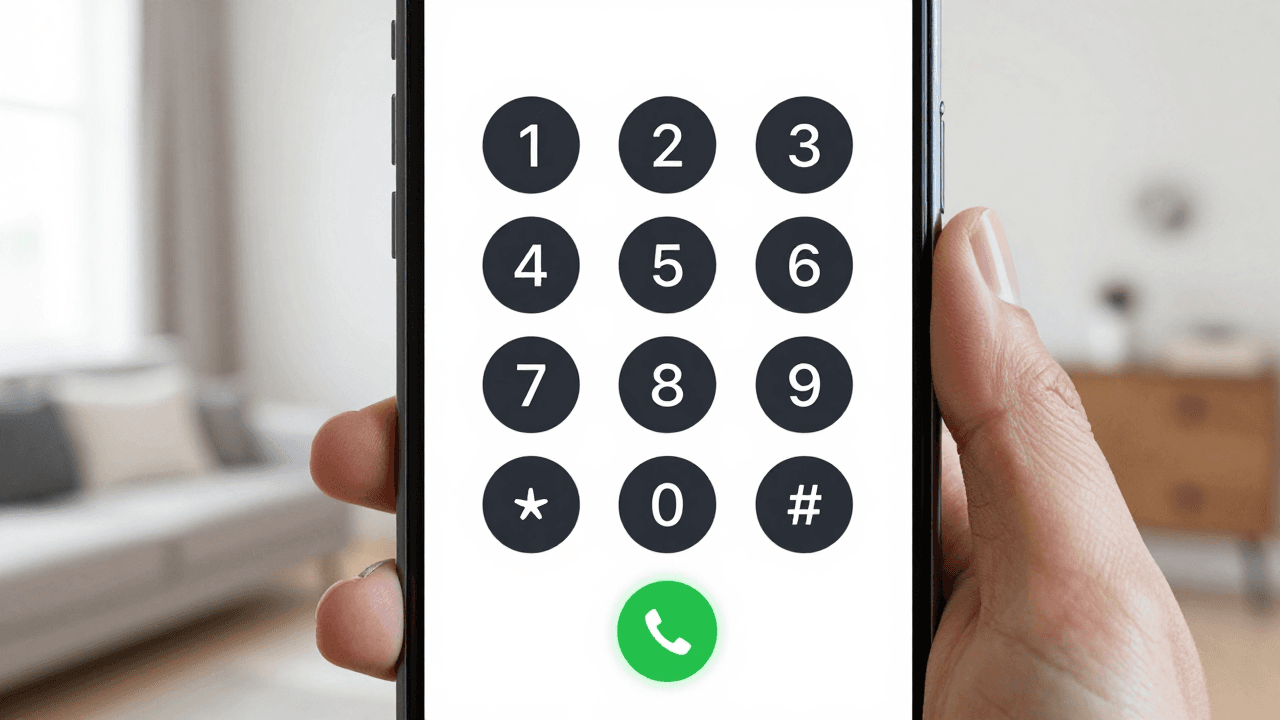
The practical result is simple. You open a tab, type the number on a dial pad, allow the microphone once, and talk. There is no installer, no account on a second device and no SIM swap. If your laptop or phone has a browser and a working connection, you can make a global call. For travellers who have been burned by bloated VoIP apps, which is short for Voice over Internet Protocol and just means voice calls carried over the internet, that simplicity is the point.
What is the right way to dial each country?
Most failed calls to East Asia come down to formatting, so it is worth learning the pattern once.
South Korea (+82). Domestic numbers begin with a zero, such as 02 for Seoul or 010 for mobiles. When you dial internationally, drop that zero. A Seoul office at 02-555-0123 becomes +82 2 555 0123, and a mobile at 010-1234-5678 becomes +82 10 1234 5678.
Taiwan (+886). The same rule applies. Taipei's area code is 02, so a number written 02-2345-6789 locally is dialled as +886 2 2345 6789. Mobile numbers start with 09 locally, and the 0 disappears too, giving +886 9 followed by the remaining digits.
Hong Kong (+852). There are no area codes, which makes it the easiest of the three. Numbers are 8 digits long, so you dial +852 and then the full eight digits exactly as printed on the business card.
A useful habit is to save every contact in full international format with the plus sign. Then the same entry works whether you are calling from a hotel in Bangkok, a cafe in Lisbon or a coworking desk in Mexico City.
How do the three destinations compare?
| | South Korea | Taiwan | Hong Kong | |---|---|---|---| | Country code | +82 | +886 | +852 | | Time zone | UTC+9 | UTC+8 | UTC+8 | | Daylight saving | None | None | None | | Local number format | Drop leading 0 | Drop leading 0 | 8 digits, no area code | | Dominant chat app | KakaoTalk | LINE | WhatsApp and WeChat | | Typical landline use | Offices, clinics, management desks | Offices, clinics, government counters | Offices, banks, suppliers |
The takeaway from the table is that the chat apps differ by country but the landline does not. In all three places, the fixed line is the common denominator, which is why cheap international calls to landlines are the feature that matters most when you move or travel between them.

When is the best time to call?
Because the three markets are only an hour apart, you can batch your calls into one window. Business hours in all three generally run from the morning to the early evening on weekdays, and Korean and Taiwanese offices often pause for a lunch break around midday, so a call at 12:30 may simply ring out. Aim for mid-morning or mid-afternoon local time.
Do the arithmetic before you dial. If you are in New York during daylight time, Seoul is 13 hours ahead and Taipei and Hong Kong are 12 hours ahead. That means your early evening is their next morning, so a call placed at 7 p.m. in New York lands at breakfast time in Taipei. Setting a calendar reminder in the other city's time zone avoids waking a clinic receptionist or reaching a closed counter.
What can you realistically get done with a browser call?
Plenty of everyday errands become simple once you can reach a landline from anywhere.
- Housing: confirming a viewing, asking a building manager about a deposit or reporting a broken appliance.
- Healthcare: booking an appointment at a clinic or checking that a pharmacy has your prescription.
- Banking: calling a branch to unlock an account or confirm a transfer that your home bank flagged.
- Business: following up with a supplier, a factory contact or a customs broker whose number is a fixed line.
- Family: reaching relatives who only have a home phone, which is still common among older relatives.
For a freelancer or founder working with partners in the region, the same tab doubles as a simple outbound line. Companies like AEGONTECH LLC build tools around the idea that communication should not require a heavy installation, and Dialable follows the same lightweight philosophy.
How good is the call quality?
Quality depends mostly on your own connection rather than on the destination. Voice needs surprisingly little bandwidth, and a typical codec uses well under 100 kilobits per second, far less than streaming music. What hurts a call is latency, the delay between speaking and being heard, and jitter, the uneven arrival of audio packets. Wired connections or a strong Wi-Fi signal keep both low.
A few habits help. Use a headset so the microphone sits close to your mouth. Close tabs that are streaming or downloading. If hotel Wi-Fi is congested, switch to a phone hotspot for the duration of the call. East Asia has some of the densest fibre and 5G coverage in the world, so the local end is rarely the weak link.
How does this compare with the alternatives?
Roaming works but is expensive, and eSIMs solve data more than they solve landline calling. WhatsApp and KakaoTalk calling reach only people who run the app. Skype was long the default for reaching a landline from a laptop, and since it shut down many people have been hunting for a Skype alternative for landline calls that does not demand a subscription or a heavy download. A browser-based dial pad is the closest replacement, and it keeps working on any computer you borrow.
Dialable is also built around voice only. There is nothing to configure beyond the microphone, and nothing running in the background once the tab is closed. That focus keeps the page fast and makes it a sensible dial world tool for anyone who needs reliable phone calls rather than a full communications suite.
Frequently Asked Questions
Do I need to install anything to call Korea, Taiwan or Hong Kong? No. Dialable runs in your browser, so you only need to allow microphone access the first time you place a call.
Can I call mobile numbers as well as landlines? Yes. The browser dial pad connects to both fixed and mobile numbers, so you can reach a Seoul clinic and a Taipei mobile in the same session.
Why does my call fail even though the number is correct? The most common cause is the leading zero. Remove it after +82 or +886, and remember that Hong Kong numbers are 8 digits with no area code.
Is it safe to use on hotel or cafe Wi-Fi? Browser calls are encrypted in transit as part of the WebRTC standard. If a network blocks voice traffic, a phone hotspot is the quickest workaround.
Make your next call to East Asia a simple one
Moving between Seoul, Taipei and Hong Kong should not mean juggling three SIM cards or tolerating surprise roaming charges. With a clear sense of country codes, time zones and local habits, a single browser tab covers almost every errand. Open dialable.world, type the number in international format and make the call from wherever you happen to be.