Life at Sea: How Cruise Ship and Superyacht Crew Call Home Without Roaming Fees or a Local SIM
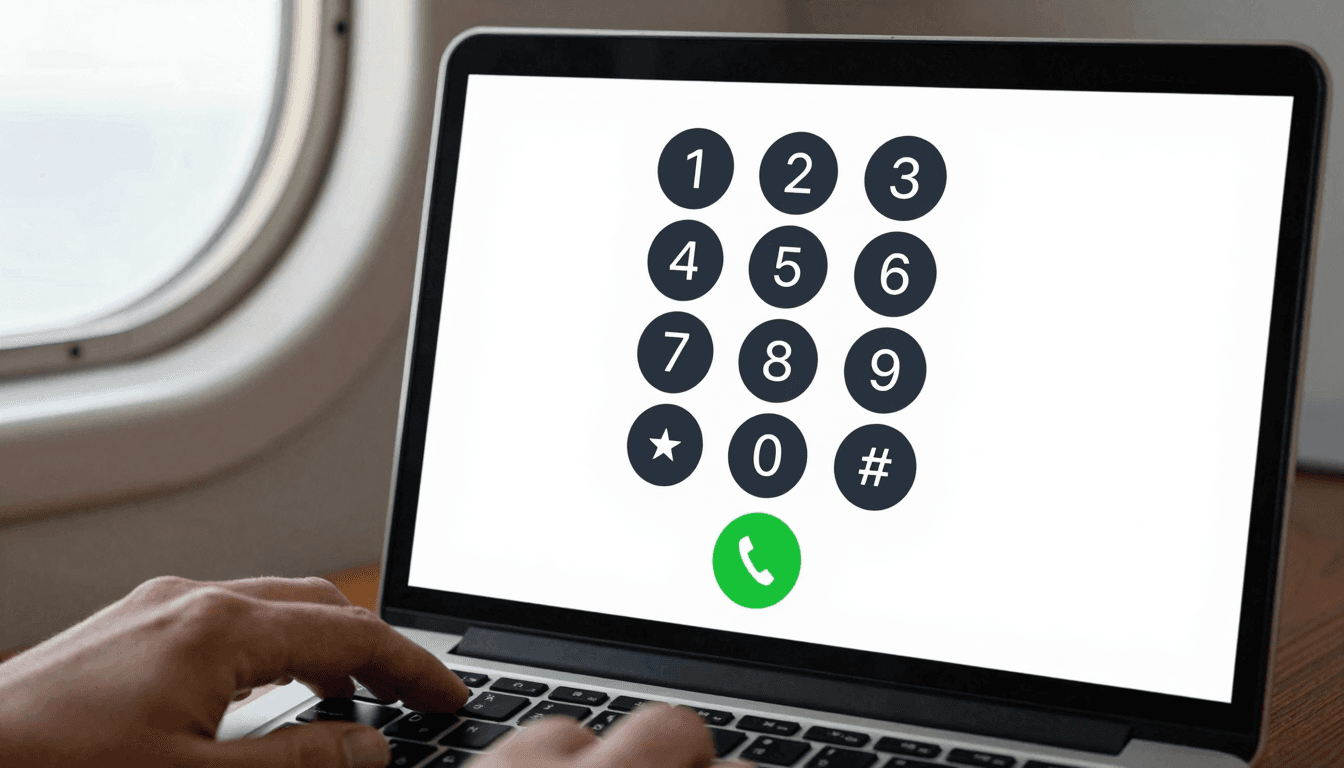
Six months on a rotation, one satellite uplink shared by two thousand passengers, and a phone bill that used to eat half a paycheck — that's the reality most cruise ship and superyacht crew accept as the cost of working at sea. Ship wifi is metered, expensive, and often too congested during peak hours for a video app to hold a connection at all. That's exactly the gap Dialable was built for: a browser-based service that lets anyone with a laptop and a shipboard internet connection dial a real landline or mobile number anywhere in the world — no app installed on either end, no local SIM, no calling card PIN to type in at 2 a.m. between watches. This piece walks through why maritime calling is so broken, how Dialable's underlying technology actually works, and how crew members are using it today to stay connected to family, banks, and agencies back home.
Key Takeaways
- Traditional satellite and crew-calling-card rates for maritime workers commonly run $1–$5 per minute, compared to a few cents per minute for landline calls through a browser-based service like Dialable.
- Ship wifi bandwidth is shared across hundreds or thousands of people, which is why lightweight audio calls succeed far more often than bandwidth-hungry video calls.
- Dialable works over any browser tab with WebRTC support — no app to download, and no requirement that the person being called uses any app at all.
- Crew rotations mean phone numbers, home countries, and paperwork obligations change constantly; a browser-based dial tool travels with the worker, not with a SIM card tied to one country.
Why Is Calling Home From a Cruise Ship or Superyacht So Expensive and Unreliable?
Most vessels rely on satellite internet — VSAT or increasingly Starlink Maritime — that is fast by ship standards but still a shared, finite pipe split among crew and often thousands of guests. Ship-issued calling cards or the onboard "crew calling" kiosks that route through satellite voice channels routinely charge $1 to $5 per minute for international calls, and coverage quality swings wildly with weather, satellite handoffs, and how many other people are streaming video at the same moment. Popular consumer apps compound the problem in a different way: Skype, WhatsApp calling, and Zoom all require the person on the other end to also have the app installed and an account set up — a real obstacle when you're trying to reach a landline at a pharmacy, a bank's fraud department, or an elderly parent who has never installed anything beyond the phone dialer that came with their handset.
Dialable sidesteps both problems. Because it places a genuine audio call to a real phone number — landline or mobile — rather than an app-to-app connection, the person receiving the call just answers their phone exactly as they always have. And because it's audio-only, it uses a fraction of the bandwidth a video call demands, which matters enormously on a connection already split among the entire crew mess.
What Is WebRTC, and How Does a Browser Actually Make a Real Phone Call?
WebRTC (Web Real-Time Communication) is an open standard built into every modern browser that lets a web page capture microphone audio and stream it in real time without installing any plugin or app. Dialable uses WebRTC on the browser side, then bridges that audio into the traditional telephone network — the PSTN, or Public Switched Telephone Network, which is the global grid of landlines and mobile carriers that has existed for decades. That bridging happens through VoIP (Voice over Internet Protocol), the general term for carrying voice calls as data packets over the internet instead of dedicated phone lines, using signaling protocols like SIP (Session Initiation Protocol) to set up and tear down each call.
Two more terms matter for call quality at sea: a codec is the algorithm that compresses your voice into a small enough stream to survive a slow or unstable connection (this is why audio calls stay clear on ship wifi when video calls freeze), and latency is the delay between speaking and being heard — kept low enough on a well-implemented WebRTC-to-PSTN bridge that conversations feel natural even over a satellite hop, typically in the 150–300 millisecond range under normal conditions, versus the multi-second lag that plagued older satellite phone calls.
How Do Crew Members Actually Use Dialable Onboard?
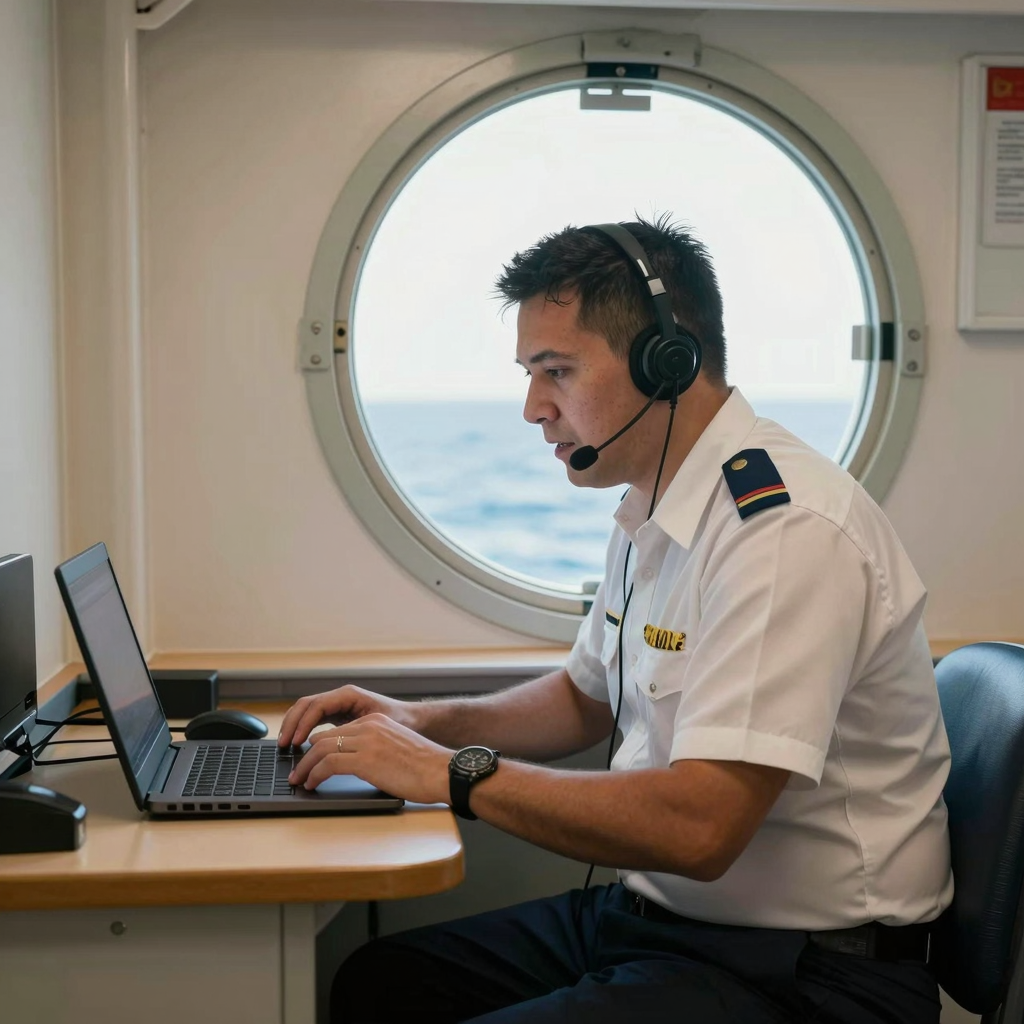
The workflow crew report is intentionally simple. During off-watch hours, a crew member opens a browser tab — on a personal laptop in a cabin, or a shared computer in the crew lounge — logs into Dialable, and dials the destination number directly, exactly like using a phone dialer. No app store visit is needed, which matters when app stores are geofenced to the flag country of the ship or blocked outright by restrictive onboard IT policies. Common use cases crew describe: calling a home-country bank to unfreeze a card flagged for "suspicious" international login activity, reaching an insurance provider to sort out shore-leave medical coverage, phoning a landlord or property manager about a lease renewal, or simply calling a parent's home landline for a real conversation instead of a choppy video call that drops every ninety seconds. Because Dialable is a Skype alternative for landline calls that doesn't depend on the recipient having any software at all, it works for exactly the situations — banks, doctors' offices, government call centers — where the other end will never install a calling app.
Dialable vs. Satellite Calling Cards and Crew-Calling Apps: Cost and Reliability Compared
Shipboard calling costs break down roughly like this. Satellite calling cards sold through crew welfare programs: typically $1–$5 per minute depending on destination country, often billed in rounded-up increments. Consumer VoIP apps like Skype's "Skype to Go" or Google Voice: workable for app-to-app calls but limited or expensive for reaching a real landline, and frequently blocked or throttled by shipboard network policies that restrict certain ports. WhatsApp calling: free between two WhatsApp accounts, but useless the moment you need to reach a bank's automated phone tree or a number that doesn't have WhatsApp installed. Dialable, by contrast, is built specifically for cheap international calls to landlines — you pay a low per-minute rate to dial world numbers directly from a browser tab, with no app requirement on either side and no satellite-specific surcharge, since the call travels over the same ship wifi connection already being used for email and browsing.
For a crew member who needs to make a five-minute call home twice a week for six months, the difference between $3/minute satellite billing and a low browser-calling rate is not a rounding error — it is often hundreds of dollars saved across a single rotation, which is real money on a seafarer's or superyacht crew salary.
FAQ
Does Dialable require the person I'm calling to have an app or an account? No. Dialable places a real call to a standard landline or mobile number through the PSTN. The person you're calling just answers their phone normally — no app, no account, no download.
Will Dialable work on the slow, congested wifi typical of a cruise ship or superyacht? Audio calls need far less bandwidth than video calls, and because Dialable is strictly audio-only, it's designed to hold a connection through the kind of bandwidth-constrained, latency-variable networks common on vessels relying on shared satellite links.
Can I use Dialable to call emergency services or my home bank from international waters? Yes — since it dials into the standard PSTN, you can reach any landline or mobile number, including bank hotlines, insurance lines, and non-emergency government numbers, exactly as you would from a phone on land. Always check your ship's specific emergency communication protocols for true emergencies at sea.
How is this different from just using Zoom or WhatsApp for a call? Zoom and WhatsApp calling are app-to-app: both sides need the same app installed. Dialable makes a genuine global call to any real phone number, which is essential when the person on the other end — a pharmacy, a customs office, a relative with a flip phone — will never install a calling app.
Bringing the World Closer, One Browser Tab at a Time
Working at sea shouldn't mean choosing between an eye-watering phone bill and losing touch with the people and institutions that keep life on land running smoothly. Dialable turns any browser with an internet connection into a global phone line — call from browser, reach a real number anywhere, and hang up without checking a per-minute counter that makes you want to cut the conversation short. For crew who've spent years budgeting satellite minutes like a rationed resource, that shift changes what a five-minute call home actually feels like.
Dialable is built and maintained by AEGONTECH LLC, a software studio focused on frictionless, browser-first communication tools for people who live and work outside the reach of conventional phone plans.