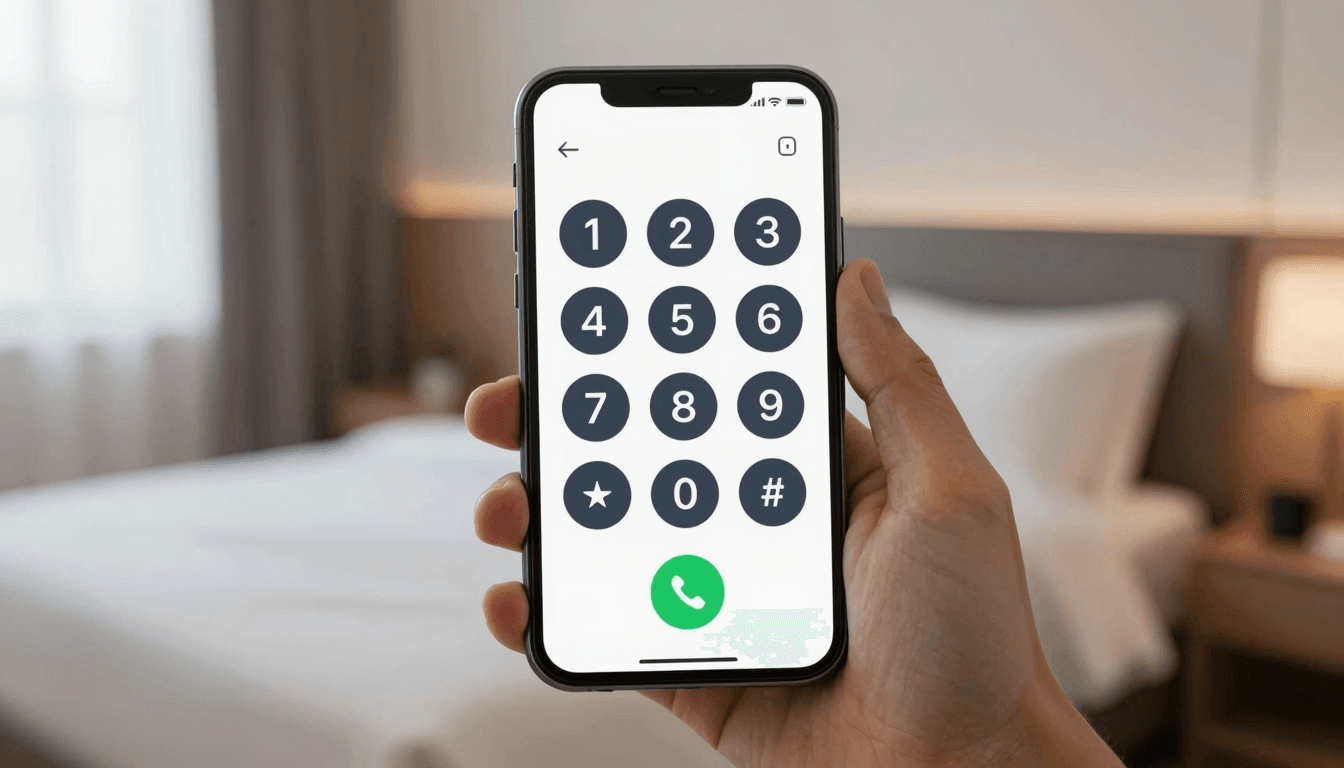
Dialable vs. Viber Out: The Real Cost of Calling a Landline From Abroad
Your hotel wifi is fine for email, shaky for streaming, and somehow always the reason your "free" calling app drops mid-sentence. You've already got three communication apps fighting for space on your phone, a roaming plan that quietly charges by the minute, and a nagging suspicion that you're overpaying to call a landline that hasn't changed its number since 1998. This is the daily reality for digital nomads, expats, and international business travelers, and it's exactly the gap Dialable was built to close. Dialable.world is a browser-based calling service — no app download, no account for the person you're calling, just a tab and a dial pad. But it's not the only browser-based option out there. Viber, best known as a messaging app, also offers a paid landline-calling feature called Viber Out, and it's worth a real, numbers-based comparison before you commit your travel budget to either one.
Key Takeaways
- Dialable runs entirely in the browser using WebRTC (the technology that lets audio travel over a plain internet connection instead of a phone network), while Viber Out requires installing and maintaining the Viber app on a phone or desktop.
- Calling a landline from abroad through a legacy carrier's roaming plan can run $1.50–$3.00 per minute, compared to a few cents per minute through a browser-based service.
- Dialable reaches standard landline and mobile numbers in 190+ countries, connecting through the same PSTN (the traditional public telephone network your grandmother's phone still runs on) that every landline uses.
- Neither the recipient of a Viber Out call nor a Dialable call needs to install anything — both terminate on an ordinary phone number — but only Dialable requires nothing installed on your end either.
- Call setup time and audio latency (the delay between speaking and being heard) both matter more on weak hotel or airport wifi, and browser-native tools generally reconnect faster after a dropped packet than app-based clients tied to a background process.
What Is Viber Out, and Why Do So Many International Callers Use It?
Viber built its reputation as a free messaging and calling app between two Viber users, popular across Eastern Europe, the Middle East, and South Asia. Viber Out is the paid add-on that lets a Viber user call a real phone number — a landline or a mobile number that isn't on Viber at all — using prepaid credit. It works reasonably well if you already live inside the Viber ecosystem for messaging and just want one more feature bolted on. The catch is that "one more feature" still means installing an app, creating an account, verifying a phone number, and topping up a credit balance before you can make a single global call.
What Is Dialable, and How Is It Different From an App Like Viber?
Dialable skips the app layer entirely. It's a Skype alternative for landline calls that runs as a web service: open dialable.world in any modern browser, and the dial pad is right there. Under the hood, it uses WebRTC to carry your voice as data over a normal internet connection, then hands the call off through a SIP (Session Initiation Protocol — the signaling standard that sets up, manages, and tears down a phone call) gateway into the PSTN, so it can ring an actual landline or mobile number anywhere in the world. Because there's no client software to install, update, or troubleshoot, the entire experience of a call from browser setup to a ringing landline usually takes under a minute the first time you use it.

How Much Does It Actually Cost to Call a Landline From Abroad?
This is where the comparison gets concrete. A traveler using their home carrier's international roaming plan to call a landline back home can pay anywhere from $1.50 to $3.00 per minute, depending on the destination country — a 20-minute call to sort out a delayed shipment or a banking issue can easily cost $40–$60. Viber Out improves on that dramatically with prepaid per-minute rates that typically land in the range of $0.02–$0.15 per minute depending on the destination, but you're still buying and managing credit inside a separate wallet, and rates to some landline-heavy regions run higher than the headline number suggests.
Dialable targets the same low per-minute range for cheap international calls to landlines — competitive with Viber Out's better rates — without requiring a dedicated top-up wallet tied to an app account. For someone who calls internationally only occasionally (a monthly check-in with a bank, a landlord, or aging parents) rather than daily, the difference between "install an app and manage a balance" and "open a tab and dial" adds up in convenience even when the per-minute math is close.
Which One Actually Connects When You're on Hotel Wifi or a Weak Connection?
Audio quality and connection reliability depend heavily on codec choice (the algorithm that compresses your voice into data for transmission) and how gracefully the app handles packet loss on unstable wifi. Viber's app uses its own proprietary calling stack, which performs well on a strong connection but, like most background-app VoIP (Voice over Internet Protocol — calling that runs over the internet instead of a traditional phone line) clients, can lag behind a browser tab when the OS deprioritizes background processes to save battery. Dialable's browser-native WebRTC approach stays in the foreground tab you're actively using, which in practice means fewer of the silent audio drops that make you ask "can you hear me?" three times in a row on spotty hotel or co-working-space wifi.

Do You Need the Other Person to Install Anything?
No — and this is the one place both services are equal. Whether you're calling through Dialable or Viber Out, the call terminates as a normal ring on a landline or mobile phone. Your aunt in Lisbon, your accountant in Toronto, or the front desk of a hotel in Bangkok answers exactly the way they always do, with zero awareness that WebRTC or SIP signaling happened on your end. The difference is entirely on the caller's side: Viber Out requires you to have the app installed and logged in; Dialable requires only that you can reach a browser.
Dialable vs. Viber Out: Quick Comparison
| | Dialable | Viber Out | |---|---|---| | Setup | Browser only, no install | App install + account + verification | | Typical landline rate | Low cents per minute | Low cents per minute (varies by region) | | Country reach | 190+ countries via PSTN | Broad, varies by plan/credit | | Works on shared/public computers | Yes | No (requires personal app login) | | Background reliability on weak wifi | Foreground browser tab | Background app process |
Frequently Asked Questions
Is Dialable actually free, or is it a paid Skype alternative for landline calls? Dialable charges low per-minute rates for calls to real phone numbers, similar in structure to Viber Out or Google Voice's international rates — there's no subscription fee just to use the dial pad, but reaching a landline or mobile number does draw on call credit, since that call has to travel through the PSTN like any other phone call.
Can I use Dialable from a shared or borrowed computer, like at a hostel or business center? Yes — this is one of the clearest advantages over an app-based tool like Viber Out. Because Dialable runs in the browser with no persistent login tied to a device, you can make a global call from any computer with an internet connection without installing anything or leaving an account logged in behind you.
Does Dialable work for calling mobile numbers, or only landlines? Both. Dialable connects to standard mobile numbers the same way it connects to landlines, through the same PSTN gateway — the "landline" framing in most comparisons is simply because that's the use case apps like WhatsApp and Zoom can't handle at all, since those tools only call other app users, not real phone numbers.
How does call quality compare to a standard mobile carrier? On a solid wifi or wired connection, WebRTC audio quality is generally comparable to a standard mobile call, sometimes better, since it isn't subject to cellular network congestion. On weak or crowded wifi, quality depends more on the connection than on which service you choose.
The Bottom Line
Viber Out is a solid option if you're already a heavy Viber messaging user and don't mind managing one more prepaid balance. But for anyone who wants to skip the install, skip the account creation, and just dial world phone numbers from whatever device happens to be in front of them, a browser-based tool built specifically for that job has the edge. Dialable.world exists precisely because most people don't want another app — they want a dial pad that works the instant they need it, whether that's a landline in another country or a mobile number three time zones away. If your calling habits are occasional but international, it's worth testing both and comparing your own bill at the end of the month. This kind of lean, purpose-built tooling is the same philosophy behind the products built by AEGONTECH LLC, which focuses on stripping unnecessary friction out of everyday software.