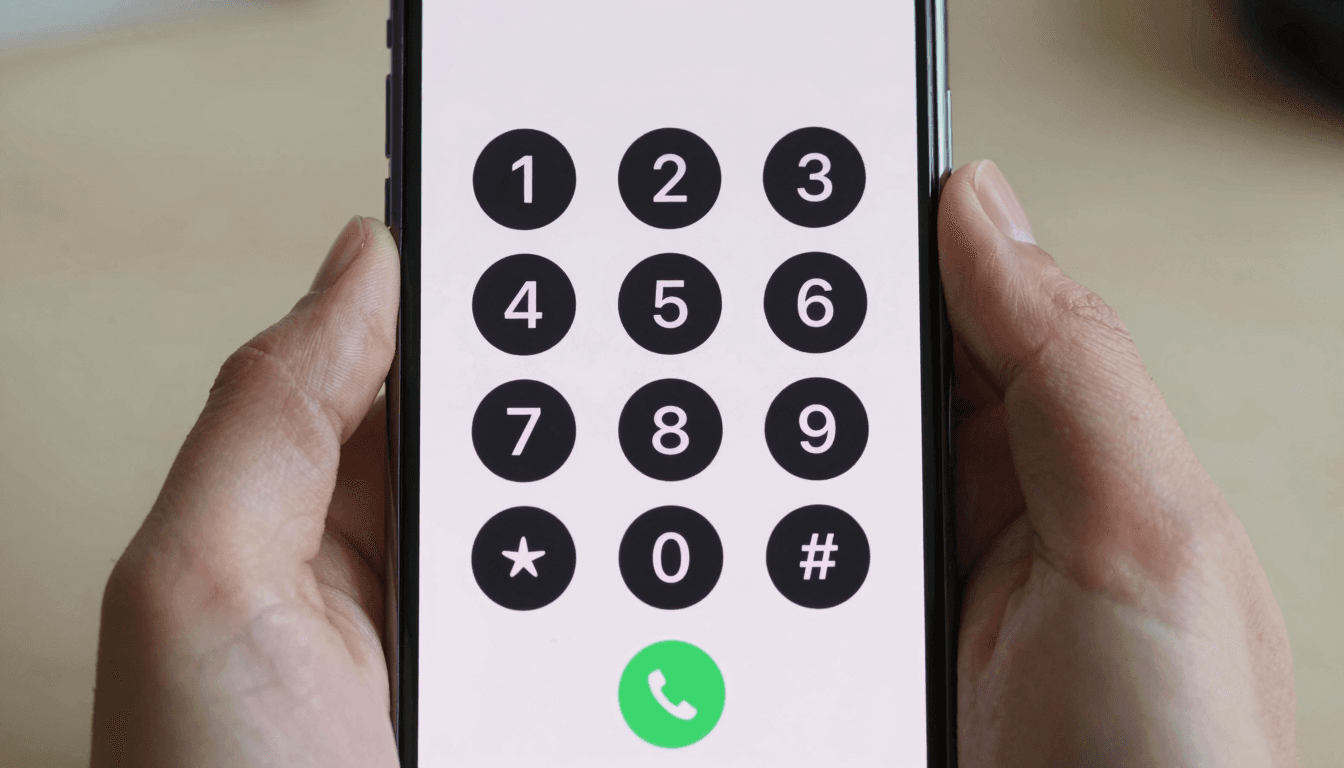
Dialable was built for moments like this one: your mother's cardiologist's office in Manila only takes calls on a landline that doesn't accept WhatsApp. Your father's pharmacy in Warsaw won't confirm a prescription refill over a messaging app. And the home care agency you hired to check on your parents twice a week wants a real phone call, not a video link nobody in the office knows how to answer. If you're one of the millions of adult children living and working abroad while trying to coordinate care for aging parents back home, you already know the problem: the tools built for modern communication assume everyone you need to reach is as tech-forward as you are. They aren't. Dialable.world exists for exactly this gap — a browser-based, audio-only calling service that lets you dial any landline or mobile number on earth from a laptop tab, no app download, no local SIM card, no roaming plan.
This isn't a niche inconvenience. Expats, digital nomads, and long-term international workers are one of the fastest-growing demographics globally, and a huge share of them are also the primary long-distance coordinators of a parent's medical care. Doctors' offices, pharmacies, home health agencies, and eldercare facilities are, almost without exception, still running on old-fashioned voice infrastructure: PSTN, the traditional Public Switched Telephone Network that landlines and most mobile carriers still rely on underneath everything else. You cannot text your way into that system. You have to call it.
Key Takeaways
- Dialable lets you call any landline or mobile number worldwide directly from a browser tab using WebRTC, a browser standard for real-time audio without installing software.
- It's audio-only by design — there's no camera, no video grid, just a clean dial pad and a call button, which matters when you're calling a hospital switchboard, not a friend.
- International SIM plans and roaming add-ons routinely run $1.50-$3.00 per minute for calls back to a home country's landline network; browser-based calling through a WebRTC-to-PSTN bridge is typically a fraction of that.
- Call setup latency — the delay between dialing and the line actually ringing — stays under roughly 300 milliseconds on a decent connection, which is the rough threshold where a call starts to feel "normal" rather than laggy.
- Unlike Skype, WhatsApp, or Google Voice, Dialable requires no account for the person you're calling, no app on their end, and no local number tied to a specific country.
Why Won't a Doctor's Office Just Answer WhatsApp?
It sounds almost absurd from inside a co-working space in Lisbon or Chiang Mai: an entire industry — outpatient clinics, community pharmacies, elder-care coordinators — that still runs its patient-facing communication through a phone system with roots in the 1970s. But healthcare administration is conservative for good reason. Patient privacy regulations, liability concerns, and decades of institutional habit mean most clinics route everything through a receptionist answering a landline, full stop. A WhatsApp message from an unknown international number, or a Zoom link nobody in a 40-person medical practice has ever clicked, simply doesn't get answered. A ringing phone does.
This is where Dialable's core promise matters: dial world numbers straight from your browser, and the call arrives on the other end exactly like any other phone call — because to the receiving landline, that's exactly what it is. Under the hood, Dialable uses WebRTC (Web Real-Time Communication), a set of browser APIs that handle audio capture and transmission without a plugin, and bridges that audio into the traditional phone network using SIP, the Session Initiation Protocol that carriers and VoIP providers use to set up and route calls. You don't need to understand any of that. You open a tab, type a number, and the phone rings in the doctor's office in Kraków.
What Does This Actually Cost Compared to Roaming or an International Plan?
Anyone who has managed a parent's care from another country has probably eaten a shock roaming bill at least once. Most mobile carriers charge $1.50 to $3.00 per minute for international calls placed while roaming, and even "unlimited" home plans usually exclude calls that terminate on a foreign landline. Add-on international calling plans help, but they're often billed monthly whether you use them or not, and they still assume you're calling from a phone with a SIM in it — not a laptop at a co-working desk with no cellular service at all.
VoIP alternatives promise cheap international calls to landlines, and they can deliver on that, but most require a monthly subscription, a dedicated business number, or a seat license aimed at teams and call centers rather than someone who needs to make four or five calls a month to a parent's medical providers. Dialable skips that entirely — it's pay-as-you-go, browser-based, and built for exactly this kind of intermittent, high-stakes calling rather than a full-time support desk.
How Is This Different From Skype, WhatsApp, or Google Voice?
It's a fair question, since all three are household names for staying in touch internationally — and the comparison is worth being specific about:
- Skype, historically the default Skype alternative for landline calls, is being wound down by Microsoft in favor of Teams, and its landline-calling credits system was never built for someone dialing occasionally from a browser with no installed app.
- WhatsApp calling is excellent app-to-app, but it cannot reach a landline or a phone that doesn't have WhatsApp installed — which describes almost every hospital switchboard and neighborhood pharmacy on earth.
- Google Voice is powerful, but its international reach centers on a US-based number and US-centric calling plans; it's not designed as a global call tool for someone routing calls into, say, the Philippines, Poland, or Kenya from wherever they happen to be working that month.
Dialable's positioning is narrower and, for this use case, more useful: it doesn't try to be a messaging platform, a business phone system, or a social app with a calling feature bolted on. It's a dial pad in a browser tab that can reach any real phone number on the planet.

What About Call Quality When It Actually Matters?
A dropped call to a friend is annoying. A dropped call mid-conversation with a pharmacist about a medication dosage is a genuine problem. Call quality in WebRTC-based calling comes down largely to codec choice — the algorithm that compresses and decompresses audio in real time — and network conditions on both ends. Modern WebRTC implementations default to codecs like Opus, which adapt bitrate dynamically to hold call clarity even on modest wifi, which matters enormously if you're calling from a co-working space, a hotel, or an apartment with imperfect internet rather than a fiber connection at a corporate office.
Latency is the other half of the quality equation — the round-trip delay between you speaking and the other person hearing it. Under roughly 150 milliseconds, a call feels essentially instant; up to around 300 milliseconds it still feels conversational; beyond that, people start talking over each other. Dialable's browser-to-PSTN bridging is engineered to keep that delay low enough that a call to a landline in another hemisphere still feels like a normal phone conversation, not a satellite delay from decades past.
Does Setting This Up Require Any Technical Skill?
No — and that's deliberate, because the whole point is removing friction for people who are already stretched managing care logistics across time zones. There's no app to install on your laptop and, crucially, nothing to install or configure on the receiving end either. A call from browser works the same way every time: you open dialable.world in any modern browser, allow microphone access once, and dial. No account is required for the doctor's office, the pharmacy, or the home care coordinator you're calling — they just answer their phone like they would any other call.

Frequently Asked Questions
Can I call a landline number, or only mobile phones? Both. Dialable routes calls into the standard PSTN network, which covers landlines and mobiles alike — this is exactly why it works for hospital switchboards and pharmacy counters, most of which are still landlines.
Do I need to be in a specific country for this to work? No. Dialable works from any location with a reasonably stable internet connection — a co-working space, a hotel, an apartment — because the call originates in your browser via WebRTC rather than through a local carrier SIM.
Is this secure enough for sensitive calls like discussing a parent's medical care? The call itself is a standard voice call routed the same way any phone call is, without video, screen sharing, or any of the extra data channels a video-calling app introduces. It's audio only, by design.
How is pricing structured — do I need a subscription? Dialable is built around pay-as-you-go browser calling rather than a monthly seat license, which fits the pattern of someone calling a handful of numbers a few times a month far better than a business VoIP contract built for a full-time support team.
Bringing It Back to the Real Problem
Coordinating a parent's healthcare from another country was never going to be solved by a better messaging app, because the institutions on the other end of the line were never going to modernize on your timeline. What actually helps is removing every piece of friction between you and a working phone call: no SIM to buy, no app to convince a 70-something receptionist to install, no roaming bill to dread. That's the entire premise behind Dialable — a global call, placed from whatever browser tab you already have open, landing on a real phone exactly where you need it to.
This kind of infrastructure-level problem-solving — take something genuinely painful, strip out every unnecessary step, and ship a tool that just works — is the same philosophy behind the products built by AEGONTECH LLC, the team behind Dialable. If you're managing care, logistics, or just relationships across a border and a time zone, dialable.world is worth having open in a tab the next time a call — not a text, not a video link — is the only thing that will actually get answered.