No Cell Towers, No Problem: How Field Researchers and Aid Workers Call Home From the World's Most Remote Places
A wildlife biologist tracking elephant migration in northern Kenya. A water-sanitation engineer setting up a well in rural Chad. A geologist camped on a glacier in Svalbard. None of them have a local SIM card, and none of them are anywhere near a cell tower. What they usually do have, thanks to a satellite hotspot or a solar-charged wifi router at basecamp, is an internet connection — thin, sometimes flaky, but there. That's the gap Dialable was built for: the moment a working wifi signal exists but a phone network doesn't. Dialable.world turns any browser tab into a working phone line, letting field teams call a real landline or mobile number back at headquarters, a hospital, or a supplier without a SIM, an app download, or a satellite phone plan that costs more than the trip itself.
This isn't a niche edge case. NGOs, university research stations, mining surveyors, disaster-response teams, and marine biologists on research vessels all share the same problem: reliable internet arrives in places reliable cell coverage never will. Below is what changes when your team stops treating "no signal" as "no call."
Key Takeaways
- Dialable turns any wifi or satellite internet connection into a working phone line — no cell tower, local SIM, or app install required.
- It uses WebRTC (Web Real-Time Communication), a browser technology built for real-time streaming, applied here purely to audio — there's no camera or on-screen visual component at all, just a call from browser to a real phone number.
- Calls route from the browser to the traditional PSTN (Public Switched Telephone Network) — the ordinary landline and mobile grid — so field teams can reach any real phone number, not just other app users.
- Satellite data plans that charge $6-$9 per megabyte make traditional VoIP apps painfully expensive; a compressed audio-only call over Dialable typically uses under 0.5MB per minute.
- Field teams calling from 40+ countries report call setup in under 10 seconds once wifi is available, versus the multi-minute negotiation often required to get a satellite phone to lock onto a signal.
Why Doesn't a Regular Phone Plan Work Out There?
Cell coverage maps look impressive until you're standing where the map turns gray. Roughly 3 billion people live outside reliable mobile broadband coverage, and that number climbs fast once you leave populated corridors — deserts, high-altitude research stations, open ocean, dense rainforest canopy. A local SIM is useless if there's no tower to talk to, and international roaming, where it exists at all in these regions, routinely runs $2-$5 per minute for a voice call. Satellite phones solve the coverage problem but introduce a new one: hardware costs of $500-$1,500 plus per-minute rates that can hit $1.00-$1.50, paid whether the call connects cleanly or drops after 20 seconds.
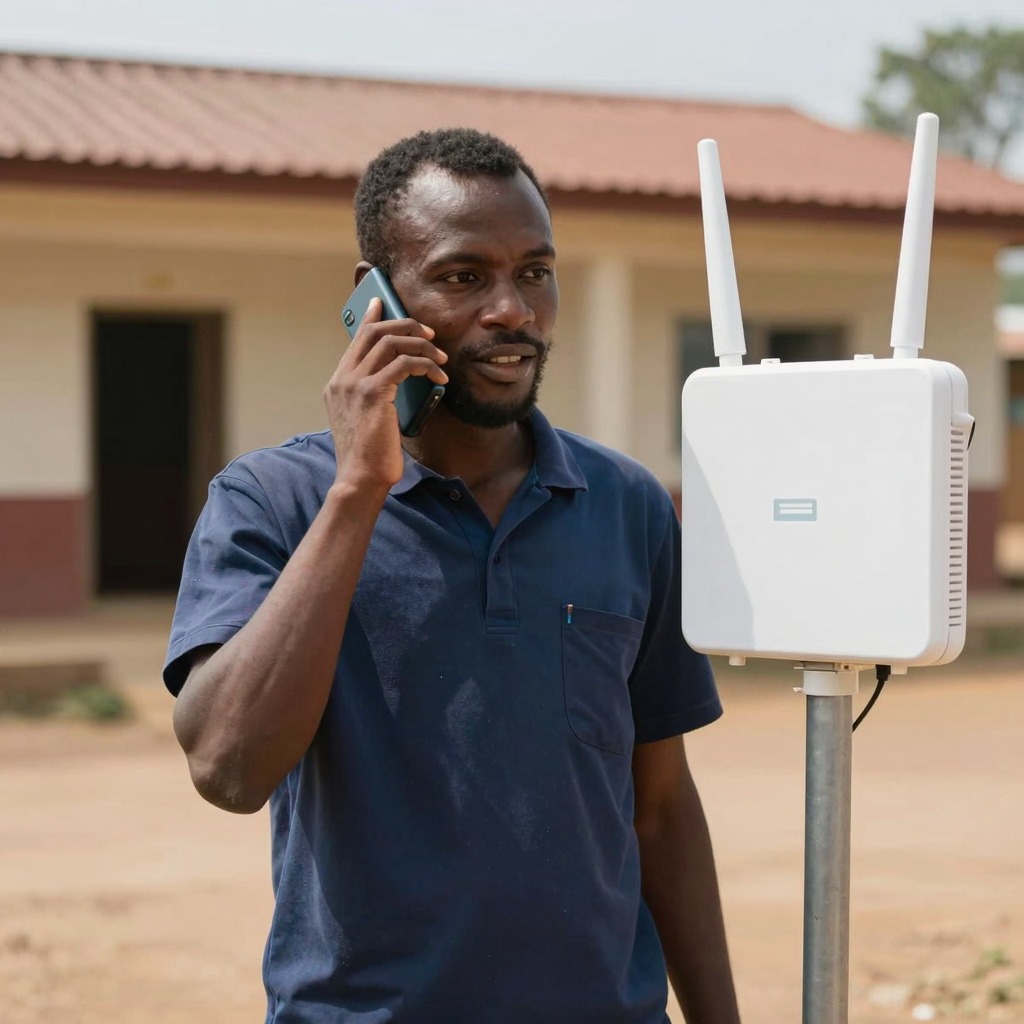
Meanwhile, the same field sites increasingly do have internet — a Starlink terminal at basecamp, a solar wifi router at a field clinic, hotel wifi during the one night a month someone's near a town. That's a browser connection. And a browser connection is all Dialable needs.
How Does Calling From a Browser Actually Work?
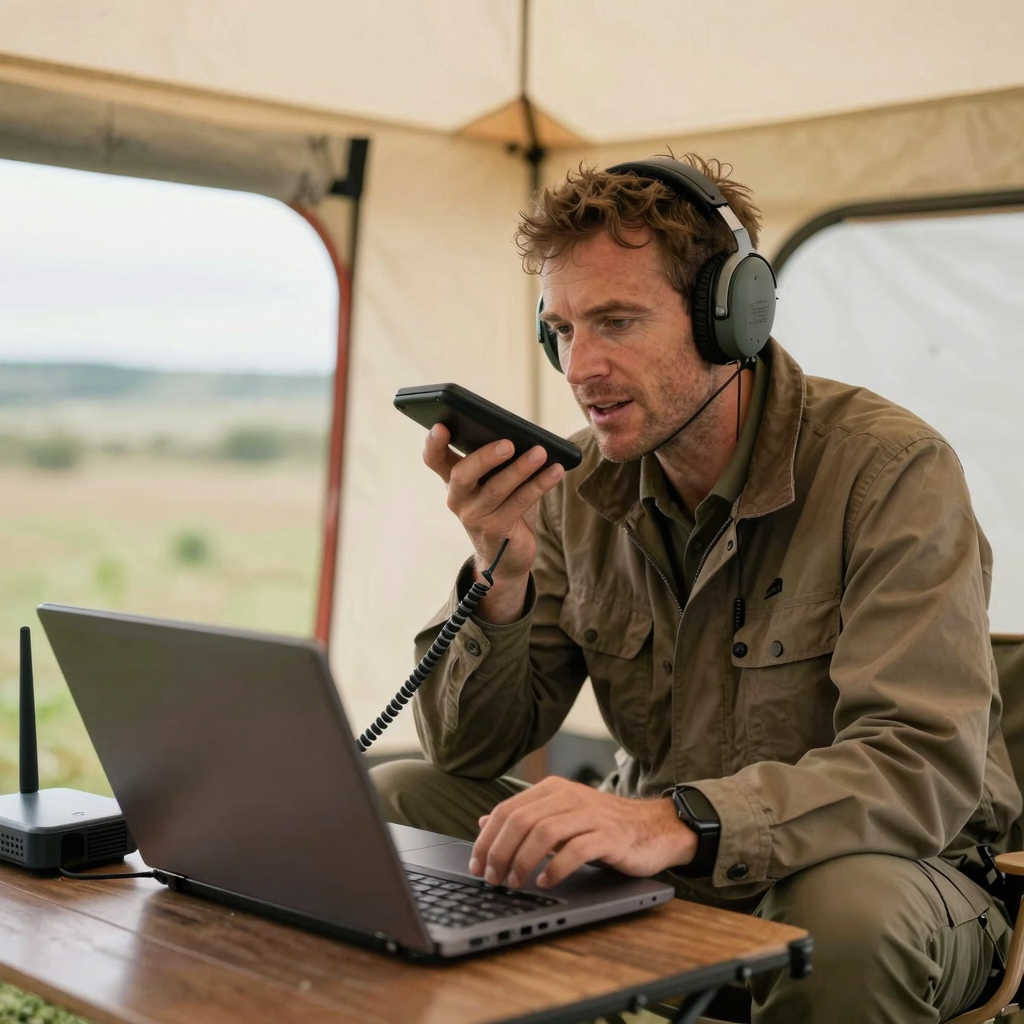
Dialable uses WebRTC, an open standard built into every modern browser, to capture audio from a laptop or tablet microphone and stream it out over the internet connection you already have — no plugin, no download, no account setup beyond opening dialable.world. That audio stream gets converted by a codec (the software that compresses and decompresses audio data for efficient transmit) and handed off through SIP (Session Initiation Protocol, the standard signaling method that sets up and tears down phone calls) to carrier partners who complete the connection onto the PSTN, the same global landline and mobile network your phone company uses. The practical result: type in any number, hit call, and a landline in Manila or a mobile phone in Nairobi rings — using nothing but the wifi signal already at the tent, the boat, or the aid station.
Latency (the delay between speaking and being heard on the other end) is the one variable that depends on the link itself. Over a decent satellite connection, Dialable calls typically run 300-600ms of latency — noticeable but very workable for coordination calls, check-ins, and supplier negotiations. That's a tradeoff every satellite-connected team already understands; it's a fair price for having a phone line at all.
What Does This Actually Cost Compared to the Alternatives?
This is where the math gets stark for field budgets. A 20-minute weekly check-in call from a remote site to headquarters, over a full field season:
- Satellite phone at $1.20/minute: roughly $24 per call, $960 over a 40-week season, plus $700+ in hardware.
- Roaming voice (where any signal exists at all) at $3/minute: $60 per call — often impossible anyway, since these sites lack towers entirely.
- Dialable over existing satellite/wifi data at typical VoIP data rates: often under $2 per call in data cost, with no hardware purchase and no monthly service contract.
That's not a marginal saving — it's the difference between a field team calling in once a week and calling in whenever something actually needs reporting. Dialable is functionally a Skype alternative for landline calls, minus the requirement that anyone on the other end also has Skype installed — the person picking up in an office in Geneva or a clinic in Manila just answers a normal phone.
How Does This Compare to WhatsApp Calling or Google Voice?
WhatsApp calling is free and works well — as long as both people have WhatsApp installed and a data connection stable enough for its app. It falls apart the moment the person you're calling is a hospital switchboard, a customs office, or a supplier's landline that's never going to install a messaging app. Google Voice offers a real phone number, but it's built around U.S. and Canadian calling and gets expensive or restricted fast for genuinely global reach into landlines abroad. Zoom, similarly, is built for scheduled meetings with a fixed guest list and a whole different feature set, not a one-off audio call to a random landline number you just found in a directory. Dialable's whole design brief is different: cheap international calls to landlines and mobiles in 180+ countries, dialed like a phone, answered like a phone, with nothing installed on either end.
Who Else Is This For Beyond Field Research?
The same wifi-yes-cell-tower-no situation shows up constantly outside expeditions and aid work: liveaboard sailors mid-passage checking in over satellite broadband, remote-cabin retreat owners without landline service, volunteer teams building infrastructure in areas a mobile carrier hasn't reached yet, and journalists embedded somewhere the local network is deliberately down. Anyone whose next real phone call needs to happen from wherever the wifi is, rather than wherever the cell tower is, is the exact use case Dialable was built to solve — a genuinely global call, from a browser tab, to any real number on earth.
Frequently Asked Questions
Does Dialable need an app installed, on either end of the call? No. The caller just opens dialable.world in a browser and dials — no download, no account required on the recipient's side, since the call lands on their ordinary phone line. This is strictly audio-only calling from start to finish.
How much internet bandwidth does a Dialable call actually use? A compressed voice call typically uses well under 1MB per minute, which matters enormously on metered satellite data plans that can cost several dollars per megabyte. It's built to be light enough for the thinnest field connections.
Can Dialable reach a landline, or only mobile numbers? Both. Calls route through the PSTN, the standard global telephone network, so a browser call from Dialable can reach a rotary landline in a rural clinic just as reliably as a smartphone in a capital city.
Is call quality reliable on a slow or satellite connection? Yes, within reason — the codec adapts to available bandwidth, and most users see workable call quality even on constrained satellite links, with the main tradeoff being a bit more latency rather than dropped audio.
The Bottom Line
Cell towers are never going to reach every research station, aid outpost, or anchorage — but wifi already has, or soon will, in far more of those places than most budgets account for. Dialable.world exists to make that internet connection do double duty as a phone line: dial world, reach any real number, and stop paying satellite-phone rates for a call that a browser tab can handle just as well. For teams weighing whether a browser-based dialer belongs in the field kit alongside the satellite terminal, AEGONTECH LLC has been tracking how tools like this fit into lean, remote-first operations — worth a look before budgeting for another piece of dedicated hardware.