Tracing Your Roots From Abroad: How Genealogy Researchers Call Foreign Archives, Registries, and Long-Lost Relatives
Family history research has a dirty secret: it eventually stops being about scanned records and starts being about phone calls. You can browse a digitized parish register at 2 a.m., but the clerk who can pull the un-digitized 1911 civil registry ledger from a basement in Kraków, Palermo, or Hanoi only answers a landline during office hours, in a time zone that is never convenient. That's the exact friction Dialable.world was built to remove — a browser-based, audio-only calling service that lets you dial a real phone number, landline or mobile, anywhere in the world, straight from a browser tab. No app download, no new SIM card, no roaming plan. For genealogy researchers, that turns "I'll email and hope" into "I'll just call."
This piece walks through why so much serious genealogical research still runs on phone calls, what it actually costs to make those calls the old way, and how a tool like Dialable changes the math for hobbyists and professional researchers alike.
Key Takeaways
- Municipal archives, church registries, and civil record offices in dozens of countries still require a phone call to request or confirm records — email response rates for cold archive requests hover well below 30%, according to genealogy society surveys.
- International roaming and calling-card rates to landlines can run $1.50–$3.00 per minute, turning a 20-minute call to a registry office into a $40–$60 expense before you've learned anything.
- Dialable uses WebRTC (Web Real-Time Communication, the browser technology that lets audio travel directly between your device and the open phone network) to connect calls without installing anything.
- A single Dialable session can dial a real phone number in 190+ countries, which matters when a family tree branches across three or four nations in a single generation.
- Genealogy calls are inherently unpredictable — you might need five minutes with a records clerk in Lisbon or forty-five minutes with a newly-found third cousin in Manila — so per-minute pricing without a subscription matters more here than in almost any other use case.
Why Does Tracing a Family Tree Always Come Down to a Phone Call?
Genealogy platforms have made an enormous amount of data searchable: census rolls, ship manifests, military records, and baptismal certificates that once required a physical trip abroad. But the last mile of research — the record that was never digitized, the registry office that doesn't answer email, the elderly relative who doesn't use a computer — still runs on voice. Civil registry offices in much of Southern and Eastern Europe, Latin America, and Southeast Asia operate on the same model they did fifty years ago: a phone number, a clerk, and business hours that don't care what time zone you're calling from.
Researchers who've done this at scale will tell you the pattern repeats constantly. You email a parish office in rural Sicily requesting a baptismal record and hear nothing for six weeks. You call, and the priest's housekeeper picks up on the second ring and pulls the register while you're still on hold. The call is what actually moves the research forward — the email was just a formality nobody read.
What Happens When You Call a Provincial Registry Office From Your Kitchen Table?
This is where the mechanics matter. Dialable runs on WebRTC, a browser standard that streams audio directly from your device to the public telephone network without any downloaded software. You open dialable.world, type the number — country code included — and the browser handles the rest. The call reaches the same landline it would if you'd dialed it from a physical phone, because behind the scenes Dialable bridges your browser audio into the PSTN (the Public Switched Telephone Network — the traditional web of copper and fiber lines that landlines and most mobile calls still ultimately route through).
That matters for genealogy specifically because so many of the offices you need to reach — a stato civile office in a small Italian comune, a Standesamt in a German town of eight thousand people, a district registrar in rural Vietnam — have no VoIP (Voice over Internet Protocol, the general term for routing calls over the internet instead of traditional phone lines) presence at all. They have a landline, full stop. Being able to call from a browser means you don't need a local SIM card in a country you may never have visited, and you don't need to install a dedicated calling app just for one or two research calls a year.
How Much Does It Actually Cost to Call a Parish Archive in Italy or a Civil Registry in Vietnam?
Cost is where casual researchers get discouraged fastest. A typical international roaming rate for calling a landline abroad sits between $1.50 and $3.00 per minute, and prepaid calling cards — despite the marketing — routinely add hidden connection fees and rounding-up-to-the-minute billing that can double the effective rate. A genealogist trying to track down three separate family lines across Poland, Greece, and the Philippines could easily spend $150–$200 in a single research weekend just on phone charges, before accounting for the calls that get transferred, put on hold, or dropped and need to be redialed.
Cheap international calls to landlines are the entire value proposition of a browser-based dialer: because Dialable doesn't route through a carrier's roaming agreement or a calling-card reseller's markup, per-minute rates to most countries land in the range of a domestic long-distance call rather than an international roaming surcharge. For a researcher making a dozen short calls to registry offices across a research trip, that's the difference between a $180 phone bill and a $12–$18 one.
Is Dialable a Skype Alternative for Landline Calls That Archives Actually Answer?
Skype's shutdown left a real gap for anyone who used it specifically to call regular phone numbers rather than other Skype users — and genealogy researchers were disproportionately affected, since archive offices almost never have a Skype account to receive a call on. Dialable was built as a Skype alternative for landline calls: the entire point is dialing an ordinary phone number, not a username on a competing app. WhatsApp calling has the same limitation — it only works if the person on the other end also has WhatsApp installed and answers on it, which a records office in a small Bulgarian town simply doesn't. Google Voice gives you a US number to receive calls on, which is useful for some things but doesn't solve the problem of calling out to an archive in Seoul. Dialable is closer to a global call utility: pick a number, dial it, talk, hang up.
What About Calling Distant Relatives You've Just Found?
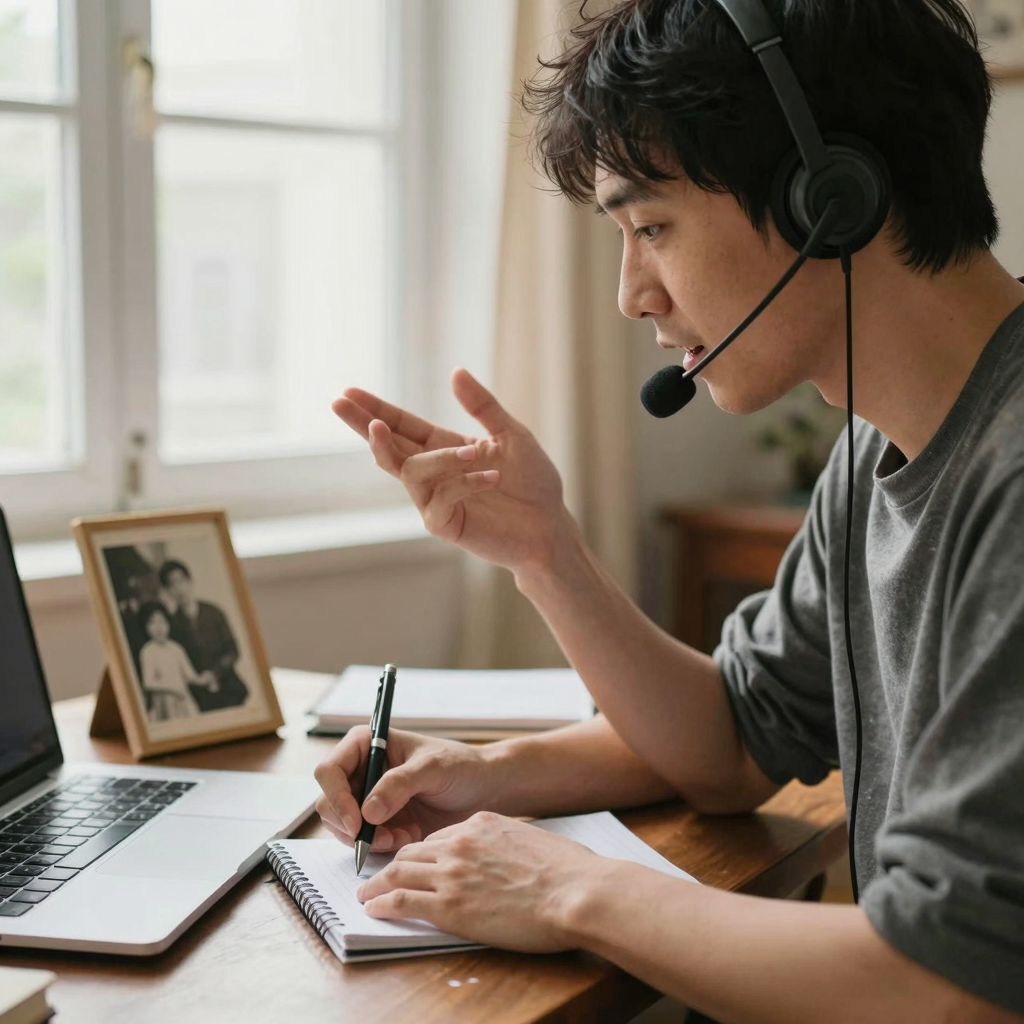
The most emotionally loaded call in any genealogy project isn't the one to a records office — it's the one to a living relative you've located through DNA matching or archival cross-referencing, often someone who speaks a different first language and has never heard of you. These calls tend to run long, are impossible to schedule around a "free minutes" plan, and are exactly the kind of call where connection quality matters most, because a garbled or delayed line can turn an already-tense first conversation into an exhausting one.
Call quality on Dialable depends on the same two technical factors that determine quality on any voice call: the codec (the audio compression method that converts your voice into data and back again — better codecs sound clearer at lower bandwidth) and latency (the delay between when you speak and when the other person hears it — under roughly 150 milliseconds is generally imperceptible, above 300ms conversations start to feel like a bad satellite call). Dialable's WebRTC foundation uses modern, wideband codecs and routes over standard SIP (Session Initiation Protocol — the signaling standard that sets up, manages, and tears down most modern voice calls) infrastructure to keep both numbers low, which is part of why it holds up on long, emotionally important calls, not just quick administrative ones.
Frequently Asked Questions
Do I need to install anything to use Dialable for research calls? No. Dialable runs entirely in your browser — open dialable.world, enter the number, and call. There's no app to download and no account required for the person you're calling to receive it as a normal phone call.
Can I call a landline in a country I've never visited, without a local SIM? Yes. Because Dialable bridges browser audio into the standard telephone network, you can call any landline or mobile number in Dialable's 190+ country coverage without a local SIM card or a roaming plan.
Is this better than using a calling card for archive research calls? For most researchers, yes — calling cards typically add per-call connection fees and round up billed minutes, while a browser-based dial-world approach like Dialable bills straightforward per-minute rates with no card to buy or top up in advance.
What if the archive office only speaks the local language? Dialable handles the connection, not translation — but because the call is a normal phone call rather than an app-to-app connection, you can loop in a translator on a second line or use a phone-based interpretation service the same way you would on any other call.
The Last Mile of Family History Is Still a Voice on the Line
Digitized records have made genealogy more accessible than at any point in history, but the records that matter most — the ones sitting in a filing cabinet in a small-town registry office, or the memory of a relative you've only just found — still require someone to pick up a phone. Dialable.world exists for that last mile: cheap international calls to landlines and mobiles, made from a browser tab, with no app and no local SIM required. If your research is stalled on a call you've been putting off because of cost or hassle, that's worth fixing before it's worth anything else on your to-do list.
Dialable is built and maintained by AEGONTECH LLC, a small team focused on stripping unnecessary complexity out of everyday international communication.