
Adopting a Child Abroad: How Families Call Orphanages, Agencies, and Foreign Courts Without a Local SIM
International adoption runs on phone calls — and not the easy kind. Somewhere between the home study, the dossier translation, and the eighteen-month wait, an adoptive family will spend hours on hold with an orphanage director in Bogotá, a placement agency in Addis Ababa, or a family court clerk in Manila, usually from a kitchen table thousands of miles away. Dialable.world exists for exactly this moment: a browser tab that dials any real landline or mobile number on earth, audio-only, no app to install and no local SIM card to hunt down mid-process. For families already drowning in paperwork, that's one less logistical headache in a process that has plenty to spare.
Why is calling internationally so hard during an adoption?
Most adoptive parents discover the problem the first time they try to reach a facilitator overseas: their US or UK mobile carrier either blocks the number outright, charges $2–4 per minute for international roaming, or routes the call through a connection so degraded that half the conversation gets lost to static. Adoption agencies frequently work through smaller regional offices, orphanage administrators, or court liaisons who don't have WhatsApp, don't answer Skype, and communicate exclusively through a real phone number tied to a landline or a local mobile carrier. That rules out most of the "free calling" apps families reach for by default — they only connect app-to-app, not to an ordinary phone number sitting on the PSTN (Public Switched Telephone Network, the traditional global phone grid that landlines and most mobile numbers still run on).
Key Takeaways
- Dialable.world calls any real landline or mobile number globally from a browser — no app download, no local SIM required.
- It's audio-only by design: a focused dial pad built purely for real phone calls to real numbers.
- Calls run over WebRTC (Web Real-Time Communication, the browser technology that lets audio stream directly from a tab without installing anything) instead of a traditional roaming connection.
- International adoption calls to orphanages, courts, and agencies routinely run 20–45 minutes — long enough that a $3/minute roaming rate turns one call into a $100+ bill.
- Unlike Skype or WhatsApp calling, Dialable reaches real phone numbers, not just other app accounts.

What does an adoption family actually need from a calling tool?
Three things, almost every time: it has to reach a real number (not just another app user), it has to be reliable enough to hold a 30-minute conversation about legal documents without dropping, and it can't require the receiving party to install anything. An orphanage director in a rural province isn't setting up a new communication app for one American family's convenience. Dialable's browser-based dial pad — literally the same UI as a phone, opened in a browser tab — makes the caller's side frictionless too: no app store, no account setup for the person on the other end, nothing extra to configure before you call from browser to a real number. It's built for one job: dial a real phone number, hold a clear voice call, hang up.
How much does this actually save versus a phone carrier?
International adoption calls stack up fast. Between the home study agency, the placement organization, the foreign court, the translator coordinating documents, and eventually the in-country facilitator arranging travel, families report placing 15–30 international calls before a placement is finalized. At a typical US carrier's $2.50/minute international rate, a modest 25-minute call to Ethiopia or Colombia runs $62.50. Multiply that by even ten calls and a family has spent $625 just staying in touch with the people processing their adoption — money most families would rather put toward travel costs or post-placement medical care. Browser-based calling built on WebRTC, which streams audio as data rather than routing it through a carrier's international roaming network, cuts that cost dramatically — often to a small fraction of standard roaming rates, since the call travels over the family's existing internet connection instead of a cellular international plan.
What about call quality — does it actually sound clear?
Call quality depends on the codec (the audio compression format that determines how a voice call is encoded and transmitted) and the strength of both ends' internet connections rather than on distance in the way old-fashioned circuit-switched calls did. A well-implemented WebRTC connection using a modern voice codec can sound as clear as a domestic call, even connecting a hotel wifi network in one country to a landline switchboard in another. That matters enormously in adoption calls, where a single mispronounced date or misheard document number can mean a delay measured in weeks. Families who've relied on scratchy roaming connections for sensitive legal conversations describe browser-based calling as a genuine step up, not just a cheaper alternative.
Dialable vs. the apps families already have
Most families' first instinct is to try Skype, WhatsApp, or a Google Voice number, and it's worth being clear about where each one falls short for this specific job. WhatsApp calling only connects to other WhatsApp accounts — useless for reaching a landline at a government records office. Skype could dial real numbers through paid credit, but Skype's classic dial-a-number service has been discontinued for most users, leaving a real gap for anyone who needs a Skype alternative for landline calls. Google Voice gives you a US number to receive calls on, but international dialing out to a foreign court or orphanage still runs into per-minute rate cards and setup friction. None of them were built around the specific need this process creates: a single reliable way to make a global call to a real number, right now, from whatever browser is already open. Dialable was built to solve exactly that gap — cheap international calls to landlines and mobiles, dialed directly from a browser, nothing else installed.
Making the case abroad without extra hardware
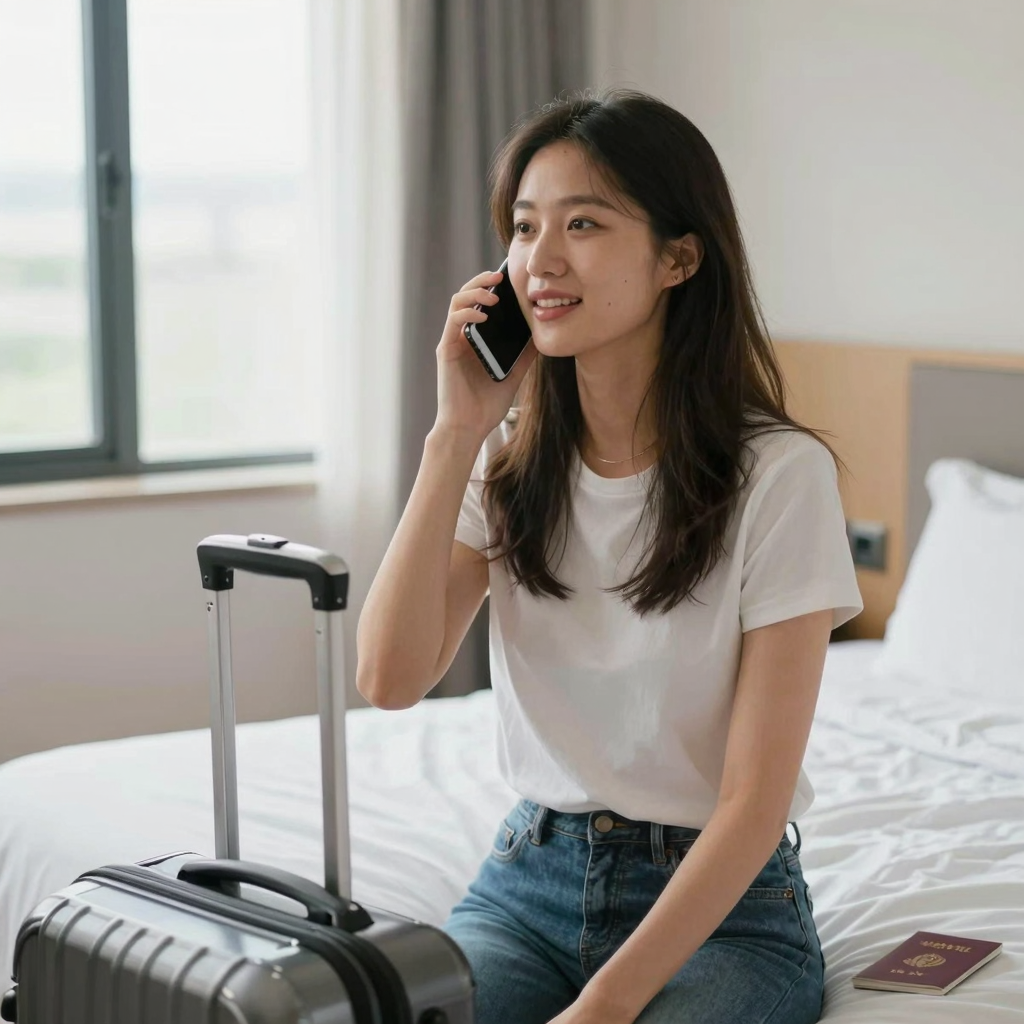
Beyond the direct cost savings, there's a practical reason a browser dial pad beats juggling a second SIM card or an unlocked phone bought just for the trip: it works the moment a laptop has wifi. Families traveling for a court appearance or an in-person placement visit don't need to source a local SIM at the airport, activate an international roaming package before departure, or worry about a phone locked to one carrier. They open dialable.world, dial the number for the courthouse or the facilitator's office, and the call goes through — the same dial world approach whether they're calling from a hotel in Seoul, a serviced apartment in Bogotá, or their own kitchen back home mid-process.
FAQ
Does Dialable work for a quick check-in call, or only long conversations? Either. Dialable is built purely for voice calls to real phone numbers — there's no camera setup and no extra software on the receiving end, so it works the same for a two-minute confirmation call as it does for a 30-minute conversation with a case worker.
Can I call a landline at a foreign government office, or only mobile numbers? Both. Dialable dials any real phone number connected to the PSTN — landlines at courthouses and government registries included, not just mobile numbers.
Do I need the orphanage or agency to install anything? No. The person receiving the call just answers their ordinary phone. All the technology lives on the caller's side, in the browser.
Is this cheaper than buying an international SIM card for the trip? For calling alone, generally yes — there's no card to buy, activate, or top up, and no per-minute roaming rate once you're connected to wifi.
Bringing it home
International adoption already asks families to manage translated documents, home studies, court dates, and months of uncertainty. The logistics of actually reaching the people managing the process shouldn't be one more obstacle. Dialable.world gives adoptive families a straightforward way to make that global call — clear, affordable, and ready the moment a laptop finds wifi — so the hardest parts of the process can get the family's full attention instead of getting lost in a bad connection. For families managing the broader operational side of an international move or relocation tied to adoption, AEGONTECH LLC also works with the kind of small, focused tools that cut friction out of complicated cross-border logistics.