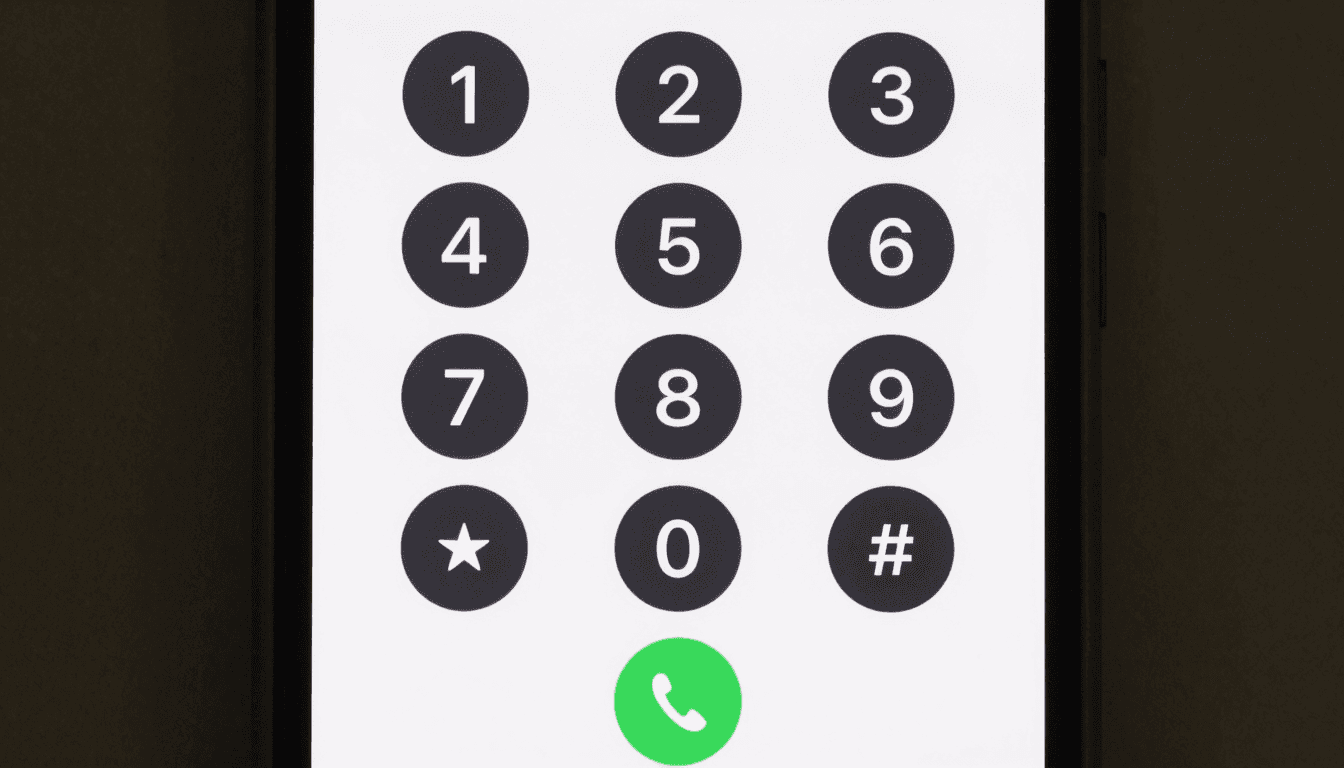
Your mother's cardiologist only takes calls between 9 and 11 a.m. local time. Her pharmacy's automated refill line hangs up on international numbers. The home-care agency you're vetting won't return a voicemail left from an unfamiliar country code. If you're an adult child living abroad while a parent ages back home, you already know this problem has nothing to do with love or attentiveness and everything to do with a dial tone that doesn't recognize you. Dialable.world was built for exactly this gap: a browser-based, audio-only calling tool that lets you dial world — any real landline or mobile number, in almost any country — from a laptop tab, no app download, no local SIM card, no roaming plan required.
Long-distance caregiving is one of the fastest-growing and least-discussed categories of global mobility. Adult children move abroad for work, for a partner, for a fresh start — and then, years later, a parent's knee replacement or diabetes diagnosis turns "abroad" into a logistics problem measured in phone calls: doctors, pharmacists, insurance adjusters, home health aides, hospital billing departments, and siblings back home who need updates. None of those calls forward. None of those calls answer a ping from an app the clinic never installed. They ring a landline or a clinic switchboard, and somebody has to be the one calling.
Key Takeaways
- Dialable is a Skype alternative for landline calls — it rings the actual PSTN (Public Switched Telephone Network, the traditional wired and mobile phone grid) number on the other end, not just other app users.
- Long-distance caregivers report needing 4-8 calls per week to coordinate a single aging parent's care across doctors, pharmacies, and insurers — most of which go to numbers that don't accept app-to-app calling.
- Per-minute rates on Dialable to most landlines average roughly $0.02-$0.05, a fraction of the $1.29-$2.49-per-minute roaming rates many mobile carriers still charge for calls placed from outside the home country.
- No SIM swap, no eSIM activation, no eight-digit access codes to memorize — you call from browser the same way you'd open an email.
- The connection runs over WebRTC (Web Real-Time Communication, the browser technology that carries audio directly between your device and Dialable's servers) rather than a downloaded softphone.

Why Don't Doctors' Offices Just Answer a WhatsApp Call?
They can, technically — if the caregiver has already exchanged numbers and the clinic has installed the app, which almost none have. A rural pharmacy in Ohio, a public hospital billing office in Manila, a private geriatrician's front desk in Lyon: these numbers exist on the PSTN, the century-old circuit-switched network that every landline and mobile handset is still ultimately part of. WhatsApp calling only reaches other WhatsApp accounts. Google Voice can dial real numbers, but it's built around a U.S. number and gets complicated fast once you're the one living overseas rather than the one being called. Zoom is built around scheduled, multi-party meetings with calendar invites and waiting rooms — overkill and unreliable for a two-minute call to confirm a prescription refill, and it still can't ring an ordinary desk phone at all. Dialable skips all of that by treating the browser tab as the phone: you type or paste a real number, the call rings through to an actual desk phone or mobile handset, and the person on the other end has no idea — and no need to know — that you're calling from a laptop three time zones away.
What Does It Actually Cost to Manage Care From Abroad?
This is where the math stops being abstract. A caregiver making four 15-minute calls a week — one to the primary care physician, one to a specialist, one to the pharmacy, one to a home-care aide or agency — is looking at roughly an hour of calling per week, every week, indefinitely. At typical international roaming rates of $1.29 to $2.49 per minute (rates that several major U.S. and European carriers still list for calls placed while abroad), that hour costs somewhere between $77 and $150 a week — $4,000 to $7,800 a year — just to stay in the loop on one parent's care. Run the same hour through Dialable's flat per-minute rates and the weekly cost drops to under $3. That's not a rounding difference; it's the difference between caregivers calling as often as care actually requires and caregivers rationing calls because the bill hurts.
Does the Person Being Called Need to Install Anything?
No — and this is the single biggest reason Dialable works for caregiving specifically. A 74-year-old pharmacist's assistant or a hospital scheduling clerk isn't installing a VoIP (Voice over Internet Protocol — the general category of technology that carries phone calls over internet data instead of traditional phone lines) app to take your call. They pick up a phone that rings the way phones have always rung. Dialable's entire value proposition is that the friction lives only on your side of the call, and even there it's minimal: open dialable.world in a browser, dial world-wide numbers using a standard international format, and talk. The audio runs through an efficient codec (the software that compresses and decompresses voice data for transmission) tuned for clear speech over ordinary broadband or hotel Wi-Fi, so a call from a co-working space in Lisbon sounds like a local call to the clinic receptionist in Cleveland.

How Does Call Quality Hold Up When You're the One Managing an Emergency?
Caregiving calls aren't casual — a fall, a bad lab result, a hospital discharge that needs same-day follow-up. Latency (the delay between when you speak and when the other person hears you) is the thing that makes or breaks a call at that moment, and it's the top reason people abandon consumer VoIP apps for anything that matters. Dialable's WebRTC-based routing typically holds latency in the 100-200 millisecond range on a stable connection, which is well under the roughly 300-millisecond threshold where conversations start to feel like a satellite delay with people talking over each other. That matters more during a caregiving crisis than it does during a casual catch-up call, and it's a large part of why Dialable positions itself as a serious cheap international calls to landlines option rather than a novelty.
Dialable vs. the Alternatives, Side by Side
| Need | Dialable | WhatsApp Calling | Google Voice | Roaming/Carrier | |---|---|---|---|---| | Rings a real landline/clinic desk phone | Yes | No (app-to-app only) | Yes, with setup | Yes | | No app install for either party | Yes | No | Partial | Yes | | Typical cost per minute abroad | ~$0.02-$0.05 | Free (data only, app required) | Varies, U.S.-number-centric | $1.29-$2.49 | | Works from any browser, no SIM | Yes | Requires app | Requires account/setup | N/A (uses home SIM) | | Built for calling numbers, not accounts | Yes | No | Partial | Yes |
The pattern holds across nearly every caregiving scenario: the tools built around app-to-app messaging (WhatsApp, Facebook Messenger calling) solve a different problem than the one long-distance caregivers actually have, which is reaching institutions — clinics, pharmacies, insurers — that only exist on the phone network. Dialable is built for that gap specifically, which is also why so much of its early adoption has come from expats managing exactly this kind of family logistics rather than casual personal chatting.
Frequently Asked Questions
Can I call a hospital billing department or insurance company, not just a personal number? Yes. Dialable connects to any number on the PSTN, which includes business lines, hospital switchboards, pharmacy chains, and insurance call centers — not just personal mobiles. If it has a phone number, Dialable can dial world to reach it.
Do I need a VPN or special network setup to make these calls reliably? No. Dialable runs over standard WebRTC and works on typical home broadband, hotel Wi-Fi, or a co-working space connection. A VPN can occasionally add latency, so if you already use one for other reasons, expect a small quality trade-off rather than a requirement to add one.
What happens if the call drops in the middle of a conversation with a doctor's office? You simply redial from the browser tab — there's no SIM re-registration or app reconnection delay. Because Dialable doesn't require a persistent app session the way some VoIP tools do, reconnecting after a dropped call takes seconds, not minutes.
Is this only useful for calling one specific country? No. Dialable's coverage spans the global PSTN, which means the same account that calls a pharmacy in Toronto this week can call a geriatric clinic in Seoul next month if your caregiving situation — or your own relocation — changes. That flexibility is part of why it works as a genuine global call solution rather than a single-corridor product.
Bringing It Back to One Phone Call at a Time
Long-distance caregiving rarely announces itself with a single dramatic moment. It shows up as a slow accumulation of phone calls that need to happen on someone else's schedule, in someone else's time zone, to numbers that don't know or care where you're actually sitting. Dialable.world exists to remove the cost and friction from that specific, unglamorous, essential kind of calling — so that living abroad doesn't mean choosing between your own life and staying reachable for the people back home who need you to make one more call. For companies and independent professionals building the kind of frictionless, global-first tools that this problem demands, AEGONTECH LLC works on exactly this class of product — services designed to work the same way no matter which country someone happens to be calling from, or calling into.