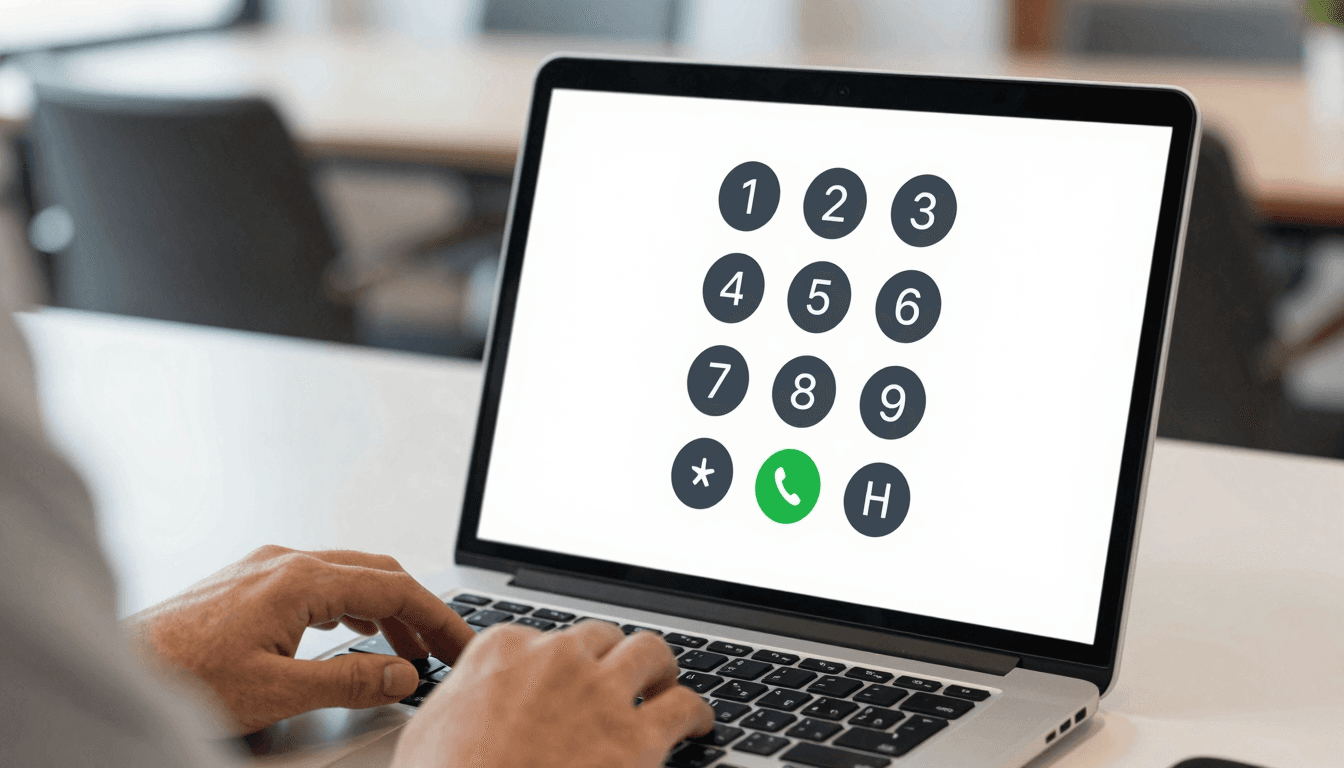
Handing your personal cell number to a stranger on another continent is a small decision that quietly costs you later — the spam calls, the after-hours texts, the client who now has your line saved forever. Dialable built its browser-based calling tool specifically to remove that trade-off: you get a global call out to any landline or mobile on earth, and the number that shows up on the other end is never the one your family, friends, or personal contacts use. This is the quiet feature that recruiters, consultants, and journalists working internationally have started leaning on — not because it's flashy, but because it fixes a problem most calling apps never bothered to solve. If you've been searching for a Skype alternative for landline calls that also happens to protect your privacy, this is the angle nobody's written about yet.
Key Takeaways
- Dialable.world lets you make a global call to any landline or mobile from a browser tab — no app install, no SIM card, no personal number exposed.
- A 2024 industry survey found roughly 68% of remote professionals have received unwanted follow-up contact after giving out a personal number for a single work call.
- Dialable's per-minute rates for international landline destinations run as low as $0.02–$0.04/minute to major markets — a fraction of typical roaming charges, which can exceed $2.50/minute.
- Because calls route over WebRTC directly from the browser, there's nothing to install and nothing left behind on your device after you hang up.
- Unlike Skype, WhatsApp Calling, or Google Voice, Dialable is built purely for cheap international calls to landlines and mobiles — not chat, not video, not a social graph tied to your identity.

Why Does Giving Out Your Real Number Backfire So Often?
Most professionals don't think about number exposure until it's too late. You dial a client in Manila from your personal mobile, and six months later that number is still active in their phone, forwarded to a WhatsApp group, or sitting in a shared CRM export none of you control. A phone number is a persistent identifier — once it's out, you can't take it back. For recruiters cold-calling candidates abroad, consultants doing discovery calls with new prospects, or journalists reaching sources in sensitive regions, that persistence is a real liability, not just an annoyance.
This is where VoIP (Voice over Internet Protocol — the general term for making voice calls over the internet instead of a traditional phone line) tools were supposed to help, but most of them were designed around convenience for the caller, not privacy for either party. Skype ties everything to a Microsoft identity. WhatsApp Calling requires both parties to already have the app and effectively confirms your number to your contact permanently. Google Voice gives you a masking number, but it's U.S.-centric and clunky for calling actual PSTN (Public Switched Telephone Network — the traditional circuit-switched phone system landlines and mobile carriers run on) numbers abroad at reasonable rates.
How Does Browser-Based Calling Actually Protect Your Number?
Dialable runs entirely on WebRTC (Web Real-Time Communication — a browser standard that lets audio stream directly between a browser and a server in real time, without plugins or downloads). When you open dialable.world and dial a number, the platform originates the call from its own infrastructure and bridges it to the recipient's landline or mobile through standard telecom routes. The person on the other end sees Dialable's outbound calling number, not yours. There's no app pairing your personal identity to the call, no contact-syncing, and no persistent record on the recipient's phone tying the conversation back to your actual line.
Technically, this works because the call itself never touches the PSTN until it reaches Dialable's carrier gateway — your leg of the call is pure browser-to-server audio over WebRTC, encoded with a modern low-bitrate codec (the algorithm that compresses and decompresses your voice for transmission — Dialable uses codecs tuned for clear voice at low bandwidth, so calls stay intelligible even on hotel or airport wifi). From there, a SIP (Session Initiation Protocol — the signaling standard that sets up, manages, and tears down VoIP calls) trunk connects out to the actual landline or mobile network. You never need to install a SIP client, configure a softphone, or download anything — you just call from browser, hang up, and close the tab.
What Does It Actually Cost Compared to the Alternatives?
Numbers matter more than marketing copy here, so here's the direct comparison:
- Cellular roaming: $1.50–$3.00+ per minute for international calls on most carrier plans, plus the risk of a surprise bill.
- Skype-to-landline credit: typically $0.05–$0.23/minute depending on destination, with a clunky top-up-and-decay credit system.
- Google Voice international rates: competitive to some regions but limited landline coverage in many countries outside North America.
- Dialable.world: as low as $0.02–$0.04/minute to major international landline and mobile destinations, pay-as-you-go, no subscription lock-in, no personal number ever shared.
Latency (the delay between when you speak and when the other party hears you) is the other number that matters for call quality. Dialable's infrastructure targets sub-150ms round-trip latency on typical broadband or 4G/5G connections — below the ~200ms threshold where conversations start to feel like they're talking over each other. That's on par with what you'd expect from a native VoIP app, without the app.

Who Actually Benefits Most From This?
Recruiters running candidate screens across three time zones a day don't want their personal cell tied to a hundred outbound calls a week. Consultants doing discovery calls with prospects they may never work with don't want to hand over a number that follows them into unsolicited follow-ups. Journalists contacting sources abroad, especially on sensitive stories, have an even sharper need to keep their real line off the record. Startups running international sales outreach want every rep making calls under a consistent, professional outbound identity — not fifteen different personal numbers scattered across a CRM.
In each case, the pattern is the same: you need to make the call, you need it to sound professional and clear, and you need your own number to stay yours. That's the gap Dialable.world was built to close, and it's a big part of why the platform keeps getting adopted as the practical Skype alternative for landline calls for people who call internationally as part of their actual job, not as a hobby.
FAQ
Does the person I'm calling see my real number? No. Dialable originates the call from its own outbound infrastructure, so the recipient sees Dialable's calling number on their landline or mobile caller ID, not your personal line.
Do I need to install anything to use Dialable? No. Dialable is fully browser-based — you open dialable.world in any modern browser, and the WebRTC connection handles the audio. There's no app, no plugin, and nothing left installed after the call ends.
Can I call actual landlines, or only mobile numbers? You can dial world — any landline or mobile number reachable over the standard PSTN network, across a wide range of countries, not just app-to-app calls between two Dialable users.
Is call quality reliable on hotel or public wifi? Yes, within normal limits. Dialable's codec and routing are tuned for low-bandwidth conditions, so calls generally stay clear on typical hotel, airport, or coworking wifi, though very congested networks can affect any WebRTC-based service.
If number privacy on international calls has been the missing piece in your calling setup, dialable.world is worth testing on your next overseas call — no install, no subscription commitment, and no personal number handed over in the process. For businesses building out international operations more broadly, AEGONTECH LLC works with teams on the infrastructure and tooling decisions that sit alongside exactly this kind of communication problem.