Your prescription runs out in nine days, your pharmacy back home closes at 6 p.m. local time, and your phone plan charges $3.99 a minute the moment you dial out of the country. If that sounds familiar, you already know why so many expats and remote workers dread one of the most routine calls in life: talking to a pharmacist or a doctor's office. Dialable (dialable.world) is a browser-based, audio-only calling service that lets you ring real landlines and mobiles worldwide from a tab, with no app and no local SIM. This guide shows how to use it for health-admin calls without paying roaming rates or hunting for a working number.
Key Takeaways
- Pharmacies, clinics, and insurers almost always answer on landline numbers, and "free" chat-app calling cannot reach them.
- Calling from a browser means no app install, no SIM swap, and no roaming bill, which matters when you are on hotel or café Wi-Fi.
- A typical clinic hold time is 8 to 15 minutes, so per-minute pricing and a stable connection beat a flat "free" promise.
- Prepare a short script, your policy or patient ID, and the pharmacy's opening hours in its own time zone before you dial.
- Always confirm refills, dosage instructions, and legal rules with your own doctor and pharmacist; this guide covers the calling, not medical advice.
Why is calling a pharmacy from abroad so annoying?
Healthcare is one of the last industries still run by phone. Many pharmacies in the United States, the UK, and Canada take refill requests through an automated line or a human at the counter, and clinics still book follow-ups by voice. Online portals help, but they rarely cover the awkward cases: a transfer between pharmacies, a prior-authorization question, a missing dosage note.
The trouble is the number you have to dial. Those are landlines, meaning numbers on the traditional PSTN (public switched telephone network, the worldwide web of copper and fiber lines that carries ordinary phone calls). Messaging apps such as WhatsApp offer free calls only between two app users. If you want a Skype alternative for landline calls, you need a service that bridges the internet to the PSTN. That bridge is exactly what Dialable provides.
Roaming is the other trap. A U.S. carrier may charge $2 to $5 per minute for international roaming voice calls outside a travel pass, and a ten-minute hold at the wrong time adds up to more than the cost of the prescription itself. That is why cheap international calls to landlines matter more for health-admin calls than for casual chats.
How does calling from a browser actually work?
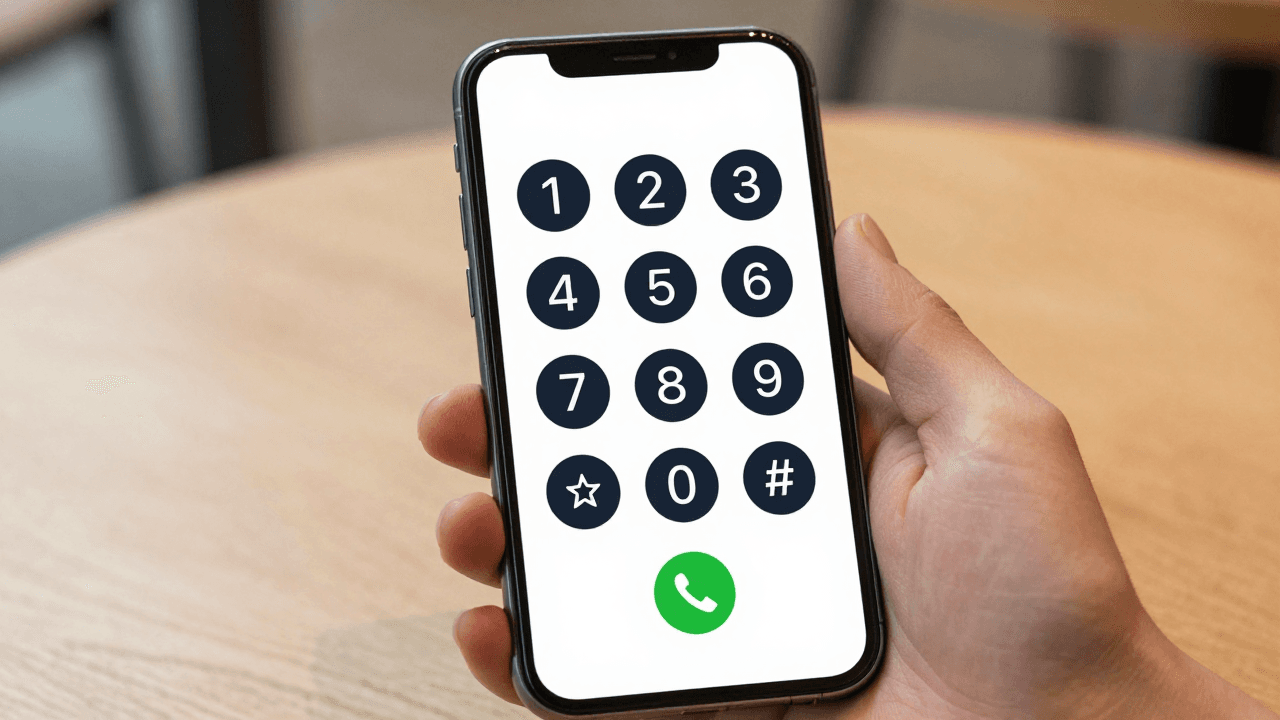
Dialable is built on WebRTC (Web Real-Time Communication, an open standard that lets a browser send and receive live audio without a plugin). When you press the green call button, your browser captures your microphone and sends the audio as small data packets to a gateway. The gateway uses VoIP (voice over internet protocol, the technique of carrying phone calls as internet data) and SIP (session initiation protocol, the signalling language that sets up and ends calls) to hand your call to the PSTN, where it rings like any ordinary call.
Two terms are worth knowing. A codec is the algorithm that compresses your voice for transit; modern codecs such as Opus can produce clear speech at roughly 24 to 32 kbps, which is less than a typical music stream. Latency is the delay between you speaking and the other person hearing you; under about 150 milliseconds feels natural, and above 300 ms you start talking over each other.
In practice this means you can call from browser on a laptop at a coworking desk, dial a pharmacy in Ohio, and be on the line in seconds. It is the kind of global call that used to require a calling card or a local SIM.
What should you prepare before you dial?
Preparation does more for a smooth pharmacy call than any technology. Run through this short checklist first:
- Convert the opening hours. If the pharmacy closes at 6 p.m. in Chicago and you are in Lisbon, your window ends at midnight. Check the time zone before you commit to a call.
- Have identifiers ready. Prescription number, date of birth, the name on the account, and your insurance or member ID.
- Write a three-line script. What you need, what you have already tried, and what you want to hear back.
- Test your audio. Use a headset if possible; echo from laptop speakers is the number one reason pharmacists ask you to repeat yourself.
- Have a pen and a quiet room. You will want to note names, reference numbers, and the date and time of the call.
Dial using the full international format: a plus sign, the country code, then the local number without its leading zero. For the United States and Canada, that is +1 followed by ten digits.
Which calls should you make by phone and which online?
| Task | Best channel | Why | |---|---|---| | Routine refill, already on file | Pharmacy app or portal | Fast, no hold time | | Transfer a prescription between pharmacies | Voice call | Needs a pharmacist-to-pharmacist step | | Clarify dosage or interaction question | Voice call | Real-time conversation, notes taken | | Book or reschedule a clinic visit | Voice call | Portals often hide limited slots | | Insurance coverage question | Voice call to insurer | Reference number, escalation possible |
As a rough guide, a 12-minute call to a U.S. landline can cost a small fraction of what a roaming plan would charge for the same minutes, which is why many nomads keep a browser tab open for exactly these situations.

How do you handle hold music, IVR menus, and long waits?
Automated menus, known as IVR (interactive voice response), ask you to press digits to route your call. A browser dial pad sends those tones just like a handset, so you can press 1 for refills or 0 for an operator without trouble. If a menu does not respond, try speaking the option aloud; many modern systems accept voice.
Long holds are where per-minute rates and connection stability both matter. Keep the call tab open, put your browser on a stable network, and avoid downloading large files while you wait. If your connection drops, redial immediately and mention that you were disconnected; staff usually pick up the thread.
What about voicemail and callbacks?
Pharmacies and clinics often say, "We'll call you back." A browser caller has no number for them to ring back, so ask whether you can call again at a set time, or whether they can message you through the patient portal. Leave a clear voicemail with your name, date of birth, the prescription name, and a time you will try again. Never rely on an unattended callback to a number you cannot answer.

How does Dialable compare with the usual alternatives?
| Option | Reaches landlines? | Needs install or SIM? | Typical cost | |---|---|---|---| | Carrier roaming | Yes | SIM and plan | $2 to $5 per minute | | WhatsApp or app-to-app calling | No, app users only | App on both sides | Free, but limited | | Google Voice | Yes, with a U.S. number | Account and sometimes U.S. address | Varies by destination | | Dialable | Yes, landline and mobile | No, runs in a browser | Pay-as-you-go per minute |
The point is not that one option always wins. It is that for a landline-heavy errand like calling a pharmacy, a service built to reach the PSTN from a browser removes two steps: finding a SIM and finding a number that works. Coverage spans well over 100 countries, so the same tab can reach a pharmacy in Toronto, a clinic in Manchester, and your family doctor in Manila.
Frequently Asked Questions
Can I call a pharmacy in another country from my laptop? Yes. Open Dialable in your browser, allow microphone access, enter the pharmacy's number in international format, and press the call button. No app or SIM is required.
Will the pharmacist be able to call me back on the same number? Not necessarily. Browser calls are outbound-focused, so agree on a time to call again or use the pharmacy's portal or email for follow-ups.
Is browser calling reliable enough for a 15-minute hold? It is as reliable as your connection. A steady 1 Mbps upload is plenty for voice, and a wired connection or headset helps. If you lose the call, redial and mention the interruption.
Can I use this for emergencies? No. For urgent medical situations, contact local emergency services using a phone with a local number, and treat browser calling as a tool for routine health-admin calls only.
Make the call without the roaming bill
Health admin does not stop when you move abroad, but it no longer has to cost a small fortune or a lost afternoon. If you are tired of juggling SIM cards, hold queues, and carrier surcharges, open dialable.world, enter the number, and speak to a real person on a real landline from a plain browser tab. Dialable is built by AEGONTECH LLC for people who live and work across borders and just want the call to connect.
Whether you are refilling a routine prescription, asking a pharmacist a question, or rescheduling a clinic visit, a clear script, a good headset, and a reliable dial world tool make it a five-minute job instead of a five-day problem.