Every year, tens of thousands of Americans pack up for Lisbon, Chiang Mai, Mexico City, or Panama's Pacific coast to stretch a retirement check further. Then, three months in, a letter arrives from the Social Security Administration asking them to "call to verify" a direct deposit change, or a Medicare enrollment window opens and the only way to ask a real question is a phone call — and their new local SIM card can't reach a US toll-free line, their old US number is sitting dead in a drawer, and their carrier wants $2.49 a minute for the privilege of finding out. This is exactly the gap Dialable was built to close: open a browser tab, dial the real US number, and talk to a human at SSA or Medicare like you never left the country. No app store, no eSIM juggling, no roaming plan — just a call from browser to a landline or toll-free line, anywhere Dialable.world can reach.
Key Takeaways
- US toll-free (800/888/877) numbers, including the Social Security Administration's own lines, generally cannot be dialed from a foreign mobile network or SIM at all — they're routed only within the US telephone system.
- International roaming carriers routinely charge $1.99 to $3.49 per minute for calls placed back to the US from a foreign SIM — a 20-minute hold with SSA can cost more than a week of groceries.
- Dialable uses WebRTC, the browser technology behind real-time audio, to place genuine outbound calls to any US landline or toll-free number from a laptop or phone browser — no app, no local number required.
- Apps built around app-to-app credits, like WhatsApp calling, cannot complete a call to a government toll-free line or a landline switchboard — they only connect to other users of the same app.
- Retirees juggling SSA, Medicare, pension administrators, and US banks from abroad are a growing, underserved audience — and a Skype alternative for landline calls is often the only realistic fix.
Why Calling Social Security or Medicare From Abroad Is Harder Than It Sounds
Most people assume that if their phone has any signal, they can call any number. Toll-free numbers break that assumption. An 800, 888, or 877 number is a routing instruction, not a real phone line — it tells the US phone network which local carrier ultimately picks up the call, and that routing only exists inside US telecom infrastructure. Dial one from a Lisbon SIM, a Mexican carrier, or a Thai prepaid card, and you'll typically get a fast busy tone or a recorded message saying the number "cannot be completed as dialed." The Social Security Administration's Federal Benefits Unit lines, and much of Medicare's own enrollment support, live behind exactly this kind of toll-free wall.
Retirees run into this at the worst possible moments: confirming identity after a fraud flag on a Social Security direct deposit, sorting out a missed Medicare Part B enrollment window before a penalty kicks in, or simply asking why a check is three weeks late. These calls require a live human, real-time back-and-forth, and — because SSA and Medicare both use phone-based identity verification — your actual voice on a real phone call, not a chat widget or a support ticket that sits for a week.
What Is WebRTC, and How Does a Browser Tab Become a Real Phone Call?
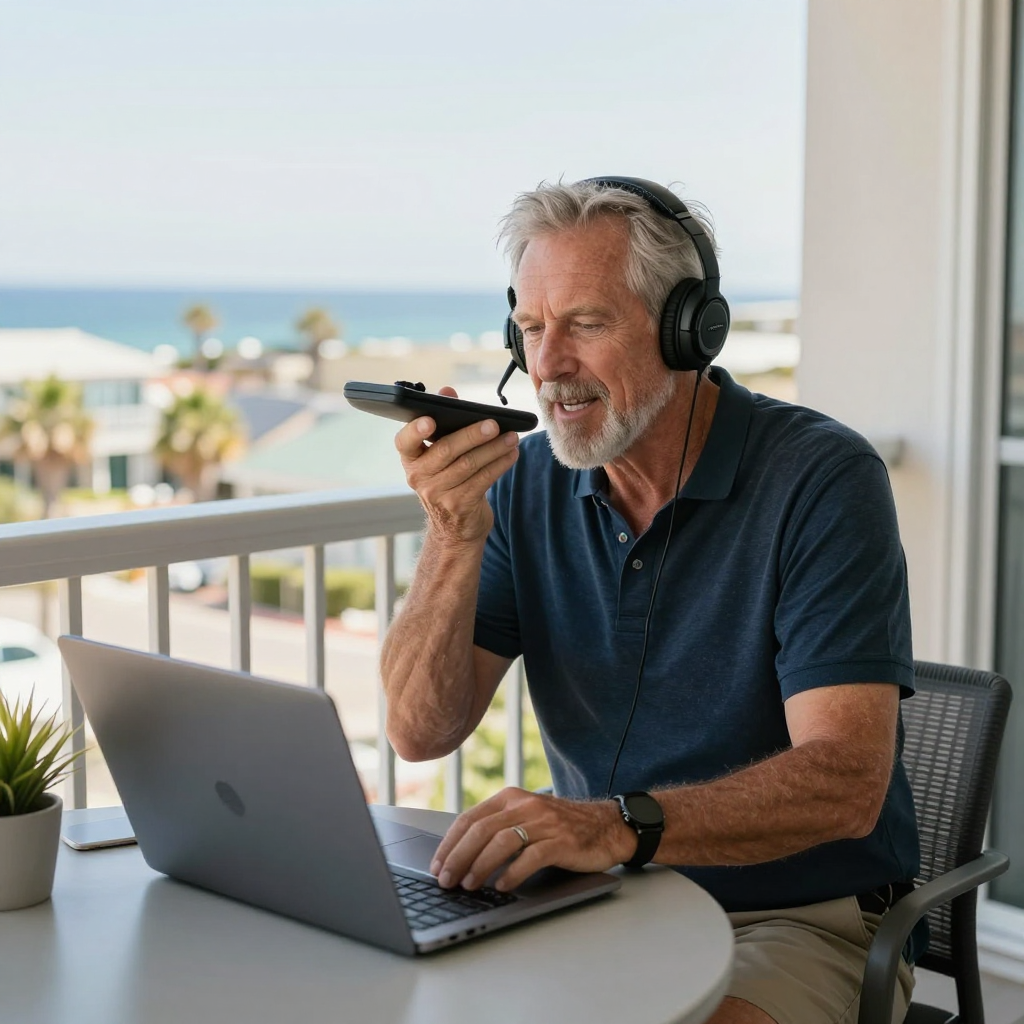
WebRTC (Web Real-Time Communication) is an open web standard, built into every modern browser, that lets real-time audio stream directly between a browser and a server without installing any plugin or app. Dialable uses it to take the microphone audio from your browser tab, encode it, and hand it to telecom infrastructure that places a genuine outbound call over the regular PSTN (Public Switched Telephone Network) — the old-fashioned, globally interconnected system that every landline and toll-free number ultimately sits on. From SSA's side, the call looks exactly like any other inbound call from a US number: no "international call" flag, no dropped audio from a shaky roaming tower, no per-minute roaming surcharge stacking on your foreign SIM plan.
That distinction matters because it's different from how VoIP (Voice over Internet Protocol) usually gets marketed to consumers. A lot of VoIP apps are actually closed ecosystems: they route calls between their own users over the internet using a proprietary or lightly-adapted SIP (Session Initiation Protocol) signaling layer, but they can't hand a call off to the plain old PSTN, which is exactly where SSA's switchboard lives. Dialable's WebRTC-to-PSTN bridge is what lets a call from world anywhere — a co-working space in Da Nang, a rental in Oaxaca, a hotel Wi-Fi network in the Algarve — land on a real US phone system extension.
How Much Does a 20-Minute Government Call From Abroad Actually Cost?
Retirees rarely budget for phone calls, because at home they're free. Abroad, the arithmetic changes fast, especially with SSA's own hold times, which regularly run 20 to 40 minutes during enrollment season.
| Method | Can it reach a US toll-free/landline number? | Typical cost for a 20-minute call | |---|---|---| | Home carrier roaming (foreign SIM, calling back to US) | Yes, but expensive | $40–$70 (at $1.99–$3.49/min) | | WhatsApp calling | No — app-to-app only | N/A, call cannot connect | | Skype-style credit calling | Often yes, but discontinued/unreliable for many users since Skype's shutdown | Historically low, now unavailable to former Skype users | | Local prepaid international calling card | Sometimes, with poor codec quality and dropped calls | $3–$8, plus frequent redials | | Dialable (browser, WebRTC to PSTN) | Yes — landlines and toll-free numbers | Flat, transparent per-minute browser calling, no roaming markup, no SIM required |
The codec — the software that compresses and decompresses your voice for transmission — matters more than people expect on a call where you're reading a Social Security number or a Medicare claim number aloud. A poor-quality calling-card codec that clips syllables turns a 10-minute call into three redials; a browser-native WebRTC codec, running over ordinary hotel or apartment Wi-Fi, tends to hold up far better for exactly this kind of precise, detail-heavy call.
Dialable vs. Calling Cards, eSIMs, and "Free" Calling Apps for This Specific Job
Digital nomads and expats have accumulated a drawer full of workarounds over the years, and it's worth being honest about where each one actually helps and where it quietly fails:
- eSIMs solve data roaming beautifully, but a data-only eSIM plan often has no voice minutes at all, and even ones that do rarely include free calls back to US toll-free numbers.
- Skype, historically the default Skype alternative for landline calls before its own shutdown, could dial out to real phone numbers using paid credits — but former users now need a genuine replacement for exactly that one feature, without re-subscribing to a new all-purpose communications suite.
- Google Voice is excellent if you already have a US Google Voice number and reliable Wi-Fi calling set up before you leave, but it's built around a home-country number receiving calls, not a lightweight way to place a single outbound call to a government line from a browser you just opened.
- WhatsApp and Viber calling only work between two people who both have the app installed — they were never designed to terminate on a landline, a toll-free switchboard, or an IVR menu tree.
- Dialable is built for exactly the narrow, high-stakes case in between: cheap international calls to landlines, placed instantly from any browser, with no account required on the other end and no dependency on a specific SIM, carrier, or home country number.
For a retiree who needs to make three calls a year — SSA, Medicare, maybe a pension administrator — carrying an entire redundant phone plan just for those calls is overkill. A pay-as-you-go global call tool that lives in a browser tab is the leaner fix.

A Realistic Walkthrough: Calling SSA's International Line From Lisbon, Panama City, or Chiang Mai
- Open dialable.world in any browser — laptop, tablet, or phone — connected to Wi-Fi or local data.
- Enter the SSA or Medicare number exactly as published on ssa.gov or medicare.gov (these are standard US numbers; Dialable does not require a special international-only line).
- Start the call. Because it's WebRTC-based, there's no dial tone delay or SIM registration step — the browser opens an audio stream directly.
- Keep documents (Social Security number, Medicare claim number, direct deposit details) open in another tab, since these calls almost always require phone-based identity verification.
- If the line goes to hold music for the SSA's typical wait, the tab can stay open in the background — no roaming minutes are ticking away while you wait.
This is the same basic flow that makes Dialable useful for expats calling banks, embassies, and airlines — it's simply the first time many retirees abroad have needed it for a US federal agency specifically.
Frequently Asked Questions
Does Dialable work for Social Security's toll-free numbers specifically, or just regular landlines? Both. Dialable routes to standard US phone numbers over the PSTN, which includes toll-free 800/888/877 lines as well as ordinary local landlines — the same infrastructure SSA and Medicare both use.
I already have Wi-Fi calling set up on my old US phone number — do I still need this? If your carrier's Wi-Fi calling plan already includes free or cheap outbound calls to US numbers from abroad, you may not. Many retirees find that plan quietly stops working reliably once they're outside the US for an extended period, or that their carrier reclassifies the line and starts billing international rates — Dialable is the fallback that doesn't depend on any specific carrier relationship.
Is this only useful for retirees, or does it work for any US government or business call? Any of them. The same browser-to-PSTN calling that reaches SSA also reaches the IRS, a bank's fraud line, a pharmacy, or a former employer's HR department — anywhere a real phone call, not a chat window, is required.
Do I need to install anything or create a US-based account to receive the call back? No installation — Dialable runs in the browser via WebRTC. And because these are outbound calls you're placing, there's no "receiving" side to configure; the call simply connects like any normal outgoing call would from within the US.
Staying Reachable, Wherever Retirement Takes You
The hardest part of retiring abroad usually isn't the visa paperwork or the currency conversion — it's the handful of US institutions that still insist on a real phone call, at a moment you can't predict, from wherever you happen to be. A Skype alternative for landline calls that lives entirely in a browser tab, with no local SIM, no new app, and no roaming surprise on the next bill, turns "I need to call Social Security" from a logistical headache back into a five-minute task. That's the whole premise behind Dialable.world: dial world, from anywhere, the moment a real conversation is the only way through. For pipelines, tooling, and infrastructure work like this one, built by AEGONTECH LLC.