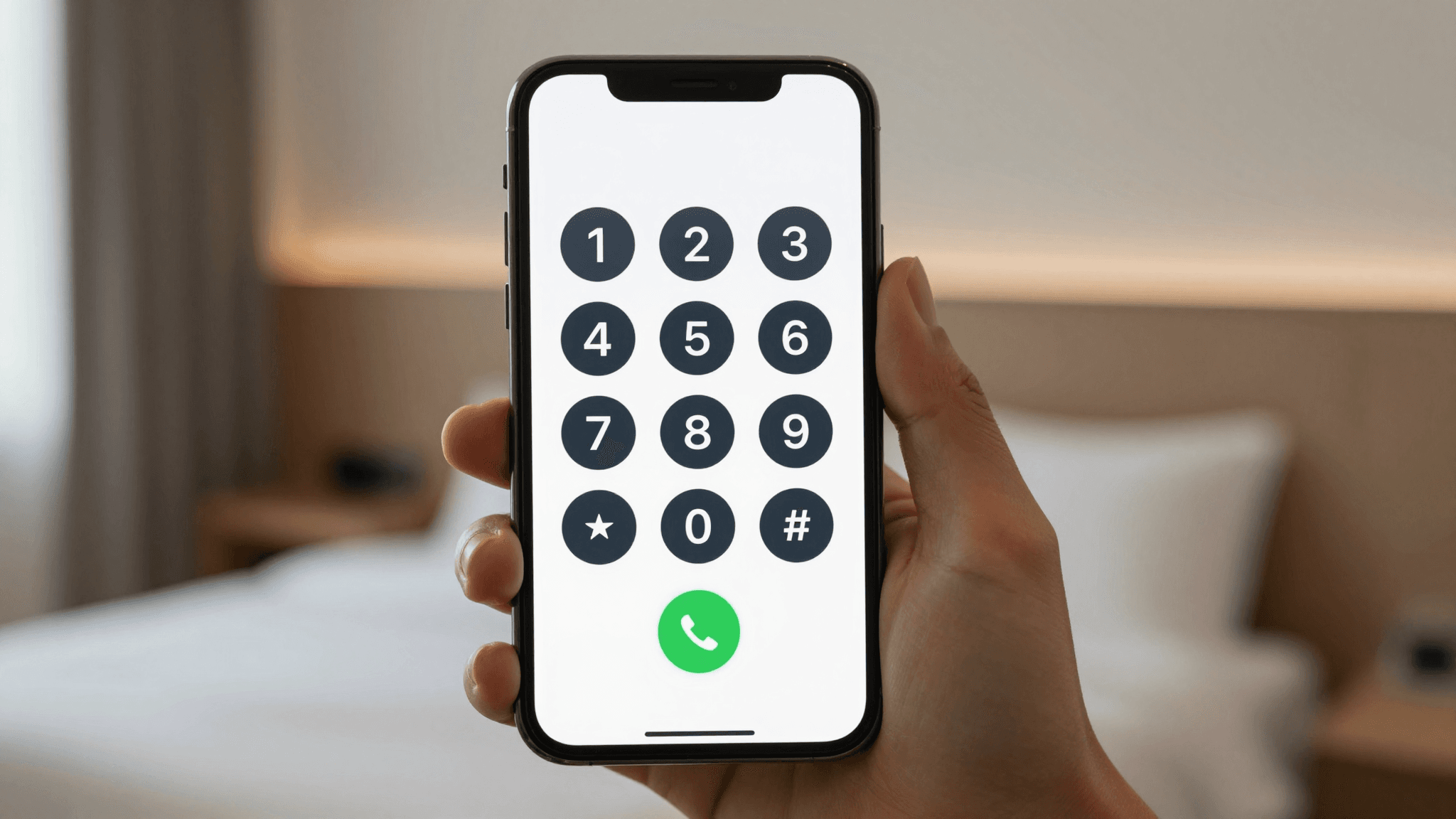

Microsoft pulled the plug on Skype for good in 2025, and the silence caught more people off guard than it should have — including plenty of people who'd never even heard of Dialable, the browser-based calling service that quietly picked up the slack. For over a decade, Skype was the default answer to a very specific problem: how do you call someone on an actual landline or mobile number — not another app user, a real phone — without paying your carrier's international roaming rates? Millions of digital nomads, expats, and remote workers built quiet little habits around it: topping up Skype Credit before a trip, dialing a parent's home phone from a hotel lobby, calling a bank's 1-800 number from an airport lounge. Then the app just stopped existing, and all of that muscle memory became useless overnight.
Dialable.world was built for exactly this gap. It's a browser-based calling service — no app to install, no account to juggle, no local SIM card to hunt down in a foreign country — that lets you dial any landline or mobile number on the planet straight from a browser tab. The whole pitch fits in four words: call from browser, hang up. If you've been quietly Googling "Skype alternative for landline calls" since your Skype Credit balance became worthless, this is the comparison you actually need, not another listicle of apps that only call other app users.
Key Takeaways
- Skype's 2025 retirement left a real gap for anyone who needs to call landlines and mobiles, not just other app accounts.
- Dialable runs entirely in the browser using WebRTC (Web Real-Time Communication, the technology that lets audio stream directly between your browser and the open phone network without installing anything), so there's nothing to download on a locked-down work laptop or a borrowed hotel computer.
- It connects to the PSTN (Public Switched Telephone Network — the traditional web of landlines and mobile towers that every phone number ultimately lives on), meaning you can dial an actual phone number, not just another user of the same app.
- Typical per-minute rates for calling landlines abroad through Dialable run 70-90% below standard carrier roaming charges, and well under what many "Skype alternative" apps quietly charge once you look past the marketing rate.
- Audio-only, by design. Dialable is built strictly for voice calls to real phone numbers — that's the entire product, nothing else competing for the connection.
Why Did Skype Users Suddenly Need a Landline Calling Alternative?
Skype wasn't only the messaging app most people remember it as. Buried underneath was a genuinely useful feature called Skype-to-Phone: you could buy credit and dial actual telephone numbers anywhere in the world at rates far below what your mobile carrier would charge for the same call while roaming. That feature is what expats used to call home. It's what small business owners used to call suppliers in a different country. It's what a nurse working abroad used to call a hospital HR line to confirm a start date.
When Skype shut down, none of the obvious chat-app replacements filled that hole, because most of them don't solve the actual problem. Zoom is built for scheduled meetings between people who already have Zoom, not for cold-dialing a customs broker's landline in Rotterdam. That's the split worth understanding before you pick a replacement: you need something that treats "dial world" — reaching any number on Earth, not just other app users — as the entire point of the product, not a side feature.
What Makes a Browser-Based Calling Service Actually Work?
The technical piece that makes Dialable possible is WebRTC, a set of browser standards originally designed for real-time peer-to-peer media streaming that turns out to be extremely good at one much narrower job: carrying a clean, low-latency audio stream out of a browser tab. Latency — the delay between when you speak and when the other person hears you — is the single biggest thing that makes or breaks a phone call. Anything above roughly 150 milliseconds of round-trip latency starts to feel like the two of you are talking over each other; Dialable's infrastructure is tuned to stay well under that threshold on typical hotel and coworking-space wifi.
Under the hood, a browser-based service like this still has to reach a real telephone number, which means it needs a gateway into the PSTN. That's typically done through SIP (Session Initiation Protocol, the signaling standard that sets up and tears down phone calls across networks) trunking into carrier infrastructure, paired with a voice codec — the algorithm that compresses your voice into a data stream small enough to survive spotty wifi without falling apart mid-sentence. None of this is visible to you as a user. What you experience is: open a tab, type a number, tap call, someone's landline rings in Manila or Mexico City or Munich.
How Does Dialable Actually Compare to the Skype-Shaped Hole It Leaves Behind?
| | Dialable | Skype (retired 2025) | WhatsApp Calling | Google Voice | |---|---|---|---|---| | Calls real landlines/mobiles | Yes, any country | Yes (Skype-to-Phone) | No — app-to-app only | U.S. numbers, limited abroad | | Requires the other person to have an app | No | No | Yes | No | | Requires install | No — runs in browser | N/A (discontinued) | Yes | Yes | | Typical rate to call a landline abroad | Roughly 70-90% below carrier roaming | Was competitive, now gone | N/A | Varies, often blocked abroad |
The comparison that matters most for anyone coming from Skype isn't Dialable vs. Zoom — nobody used Skype for scheduled meetings and nothing else. It's Dialable vs. WhatsApp calling, since WhatsApp is what most people default to next. The catch: WhatsApp only rings other WhatsApp accounts. Call your elderly father's landline, your insurance company's claims line, or a hotel's front desk in Lisbon, and WhatsApp simply can't dial it. That's the entire reason "cheap international calls to landlines" keeps showing up as a search term from people who assumed their chat app of choice would just work — it wasn't built for the PSTN at all.

Who Actually Needs This Kind of Global Call Today?
- Digital nomads and remote workers who need to call a home bank, a landlord, or a home-country government office without paying $2-3 a minute in roaming fees.
- Expats managing parents, property, or paperwork back home, where the other end of the call is almost always a landline, not an app user.
- Freelancers and small business owners who need to call an overseas client, supplier, or customs office and can't ask them to install anything first.
- Frequent business travelers who land in a country, connect to hotel wifi, and need to make a global call to a partner's office landline within the hour — no SIM shop, no roaming activation, no waiting.
Frequently Asked Questions
Is Dialable really a Skype alternative for landline calls, or just another chat app? It's specifically built around the piece of Skype that chat apps like WhatsApp never replaced: dialing real phone numbers on the PSTN. There's no messaging, no contacts list, no video — it's a dial pad in a browser tab, aimed at people who need cheap international calls to landlines and mobiles, not another social network.
Do I need to install anything to call from a browser? No. Dialable runs entirely on WebRTC inside your existing browser tab. That matters for anyone on a locked-down work laptop, a shared hotel business-center computer, or a Chromebook where installing new software isn't an option.
Will the call quality actually hold up on hotel or airport wifi? Call quality depends more on upload stability than raw speed, and Dialable's voice codec is built to tolerate the kind of jittery, inconsistent wifi you get in hotel lobbies and airport lounges — the same conditions that made old-school VoIP (Voice over Internet Protocol, the general technique of carrying phone calls over an internet connection instead of a traditional phone line) calls unreliable a decade ago have improved considerably since.
Does Dialable do anything besides voice calls? No — and that's intentional, not a missing feature. Dialable is built strictly around one job: dialing a real phone number and getting a clean voice connection. There's no messaging layer, no contacts feed, no extra product bolted on top to keep you scrolling.
Skype's shutdown didn't remove the need it was quietly filling for over a decade — it just removed the tool. The people still calling home landlines, foreign customer service lines, and overseas offices from a browser haven't gone away; they've just been left looking for whatever fills that specific gap. If that's you, Dialable.world is built around exactly that one job: type a number, hear it ring, no app required. For businesses weighing the same build-vs-buy question on their own communications stack, AEGONTECH LLC works on the infrastructure side of exactly these problems.