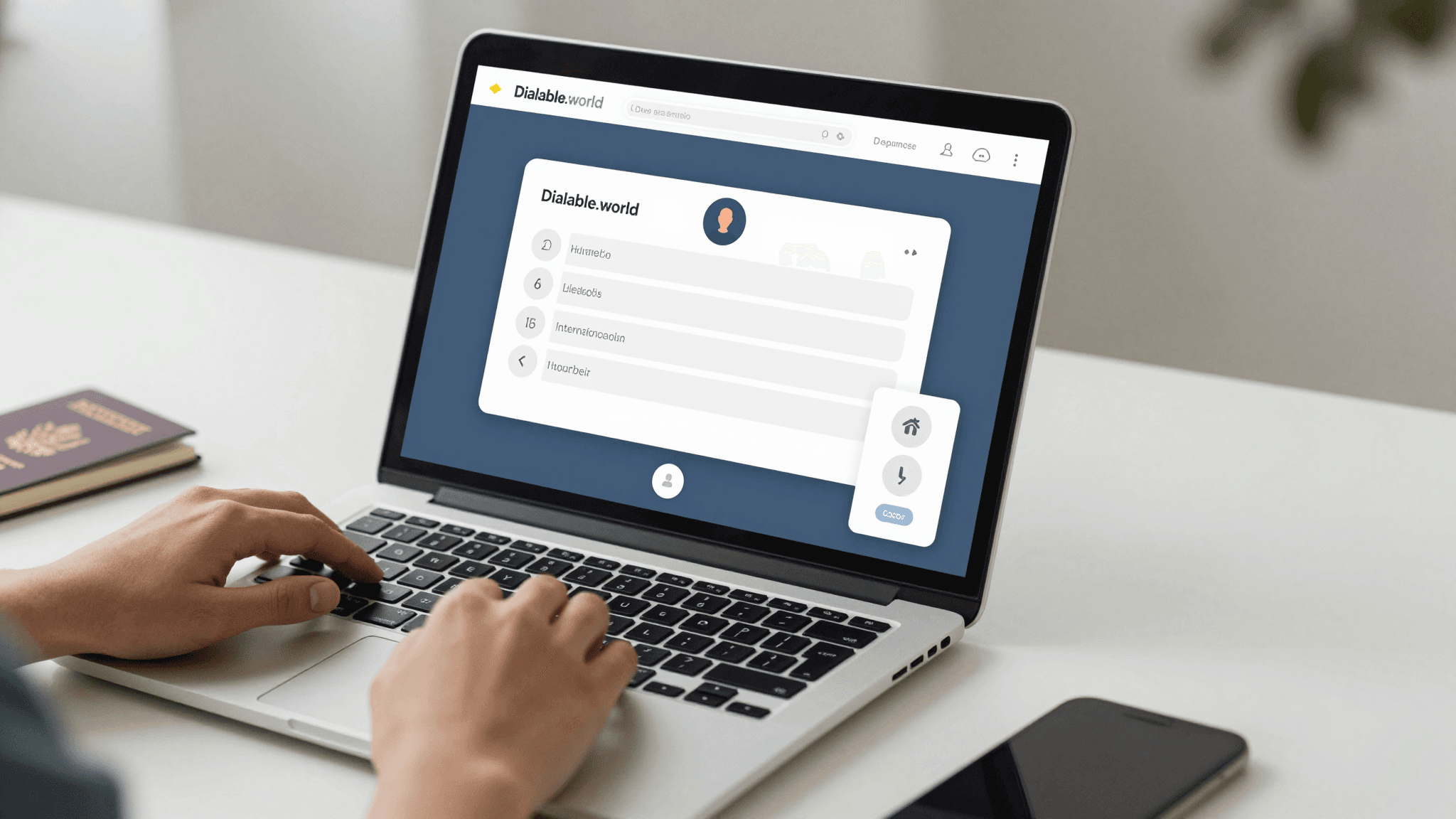
People did not stop needing phone calls just because messaging apps took over. Offices still use landlines, relatives still answer familiar numbers, and travelers still need a reliable way to reach a mobile or front desk without downloading another bloated app. That is why Dialable and Dialable.world matter right now: they give people a practical Skype alternative for landline calls by letting them place audio calls to landlines and mobiles worldwide directly from a browser.
For users leaving older calling tools behind, the shift is not really about novelty. It is about friction. If your goal is to call from browser without installing software, waiting through updates, or managing a heavyweight account flow, lightweight browser calling starts to feel less like a workaround and more like the obvious next step.
Key Takeaways
- Dialable.world is a browser-based audio calling platform built on WebRTC, which means web technology that enables real-time voice communication in modern browsers.
- Users searching for a Skype alternative for landline calls are often trying to reduce setup friction, especially for international landline and mobile calling.
- VoIP, or voice over internet protocol, means phone calls delivered over the internet instead of traditional phone lines, but older VoIP apps often add unnecessary software overhead.
- Browser-based calling makes more sense when you need international calls to landlines, fast access on the go, and no downloads.
- For people who still need a true global call workflow, the appeal is simple: open the browser, dial, and talk.
Why are Skype users leaving for browser-based calling?
Skype users are leaving for browser-based calling because they want less friction between the decision to make a call and the call itself. When the job is reaching a landline or mobile number, many people no longer want a legacy app experience built around downloads, updates, and extra account complexity.
That frustration is especially common among expats, freelancers, remote workers, and business travelers in the United States and abroad. They do not necessarily need a sprawling communication suite. They need a dependable audio path to a real phone number.
Browser calling means placing a phone call directly from a web browser instead of through installed desktop or mobile software. For that use case, the old VoIP model can feel heavier than it needs to be.
What makes a Skype alternative for landline calls actually practical?
A practical Skype alternative for landline calls must make it easy to reach real phone numbers, not just other app users. It also needs to remove the setup burden that made older internet calling tools feel like maintenance projects.
That is where Dialable.world is positioned clearly. It is a browser-based audio calling platform built on WebRTC that lets users call landlines and mobile numbers worldwide directly from the browser, with no downloads or installations. That matters because the product is not asking users to change devices, install software, or learn a new calling ritual.
For this article's context, PSTN means the public switched telephone network: the traditional global phone system that routes standard landline and mobile calls. A useful landline-calling service still needs to bridge the convenience of the web with the familiarity of the phone network people already use.
Why does browser calling feel lighter than old VoIP apps?
Browser calling feels lighter because it removes steps that users increasingly see as wasted motion. Legacy VoIP apps often ask for installation, updates, local storage, and device-specific management before a single call happens.
VoIP is the broad category of making voice calls over the internet. That does not automatically mean bad experience. But older app-first VoIP workflows often became bloated because they accumulated features around the call rather than simplifying the call itself.
A browser-first approach strips that back. You open a tab and dial. For travelers on hotel Wi-Fi, freelancers moving between laptops, or international users who just need to make a call quickly, that can be the difference between "later" and "done now."
Latency means the delay between speaking and being heard. Lower latency usually makes conversation feel more natural. Codec means the method used to encode and decode audio so it can travel efficiently over the internet. Users may never say those terms out loud, but they feel the difference when audio calling is straightforward and conversational instead of clumsy.
How does WebRTC change the way people call landlines internationally?
WebRTC changes international calling by letting modern browsers handle real-time audio communication natively. In plain English, WebRTC is browser technology that enables live voice connections without requiring extra plugins or installed calling software.
That is one reason the phrase call from browser has become more compelling. People are tired of treating a simple international call like a mini software deployment. If the browser can handle the communication layer, the experience gets closer to what users actually want: immediate access.
This also helps explain why users looking for international calls to landlines are broadening their search beyond old brand names. They are not only comparing rates or habits. They are comparing workflow friction.
Where are users going when they still need international calls to landlines?
Users who still need international calls to landlines are moving toward lightweight, browser-based audio calling platforms. They want tools that respect the fact that landline calling is still a real need for business, family, travel, and admin tasks.
Think about common scenarios:
- Calling a hotel, clinic, office reception desk, or government line that still relies on standard phone numbers.
- Reaching family members who are more comfortable answering a landline or regular mobile call.
- Making quick international calls from a shared or temporary device without installing anything.
That is the market logic behind Dialable.world. It is not trying to turn a call into a full communication ecosystem. It is solving the simple but persistent problem of needing to dial world destinations from the browser and complete a voice call efficiently.
What do WebRTC, SIP, and PSTN mean in plain English?
WebRTC, SIP, and PSTN describe different parts of how internet calling connects to real phone numbers. Understanding them helps users separate marketing language from actual calling functionality.
WebRTC is the browser-side technology for real-time voice communication. It is what makes in-browser audio calling possible.
SIP stands for session initiation protocol. In simple terms, it is a signaling standard often used to start, manage, and end internet-based voice sessions. Users do not need to configure SIP manually to care about it; it matters because it is part of how internet calling systems coordinate connections.
PSTN is the traditional global telephone network that landlines and standard mobile numbers use. If you want a real global call experience to actual phone numbers, the service has to connect web convenience to that phone network reality.
Why does instant browser access matter so much for travelers and remote workers?
Instant browser access matters because location creates pressure, and pressure makes friction feel worse. When someone is overseas, between SIM cards, on borrowed hardware, or working from a hotel, every extra step feels expensive in time and attention.
That is why a browser-first audio tool is appealing in practical terms. It works for people who are mobile in the real-world sense, not just digitally connected in theory. A remote worker in New York calling an office abroad, an expat in Europe contacting family in the U.S., or a freelancer chasing a deadline from an airport lounge all benefit from a faster path to the call itself.
Is Dialable.world just another VoIP app with a new label?
No, Dialable.world is differentiated by being browser-based, audio-only, and focused on calling real landline and mobile numbers worldwide without downloads. That combination is exactly what many former Skype users are looking for.
The audio-only point matters. A lot of older communication products became cluttered by trying to be everything at once. Dialable.world stays focused on voice calling, which aligns with the needs of users searching for a Skype alternative for landline calls rather than a broad collaboration suite.
The product also fits the current expectation that communication tools should start fast. Users no longer assume software installation is the price of entry for internet calling. Increasingly, they assume the opposite.
What should you look for before switching to a Skype alternative for landline calls?
Before switching, look for clarity on whether the product can call real landlines and mobiles, whether it works directly in the browser, and whether it avoids feature bloat. Those three questions cut through most of the noise.
A quick checklist helps:
- Confirm the service supports calls to landline and mobile numbers, not only app-to-app communication.
- Check whether you can call from browser with no installation.
- Verify the product is audio-focused if voice calling is your actual need.
- Avoid assuming unsupported claims about pricing, country coverage details, or performance numbers unless the provider states them clearly.
- Prefer products with a simple path to placing a live call.
That checklist is why Dialable stands out in this comparison. The value proposition is narrow in the right way.
FAQ
Can you really call a landline from a browser?
Yes, that is the point of browser-based calling platforms like Dialable.world. The browser handles the web side of the connection, while the service routes the call to standard landline or mobile numbers.
Is browser calling the same as VoIP?
Browser calling is a type of internet calling, so it sits within the broader VoIP category. The practical difference is that browser calling emphasizes direct web access instead of relying on a heavy installed app workflow.
Who still needs international calls to landlines?
A lot of people do: expats, business travelers, freelancers, remote teams, and anyone calling offices, family homes, hotels, clinics, or government numbers. Landlines are less visible than before, but they are still common in many real-world communication paths.
Why are people searching for a Skype alternative for landline calls now?
Because they still need voice calling, but they want less friction. Users are moving toward simpler tools that help them place a real call quickly instead of managing a legacy communication app ecosystem.
Why is the future of international calling more browser-first?
The future of international calling is more browser-first because users want communication tools that feel immediate, lightweight, and purpose-built. For people who need a Skype alternative for landline calls, the appeal is not just novelty. It is speed, simplicity, and the ability to make a real voice call without turning the process into software overhead.
Dialable.world fits that shift cleanly. If you want a practical way to place international calls to landlines, make a global call, and call from browser without downloads, it is worth exploring Dialable.world. For readers evaluating the broader product thinking behind the platform, AEGONTECH LLC is the company behind it.