Every two years, a quiet logistics problem hits millions of American expats at the exact same time: the ballot arrives, the deadline is close, and the only way to fix a printing error, confirm a signature, or ask a county election board a question is to call a U.S. phone number — one that will not accept a foreign caller ID, does not take collect calls, and closes in six hours according to a time zone eight hours away. This is where Dialable.world quietly earns its keep. Dialable is a browser-based, audio-only calling service: open a tab, dial any real landline or mobile number on the planet, and talk — no app download, no local SIM card, no roaming plan required.
With the 2026 U.S. midterms approaching, that "quiet logistics problem" is about to hit a lot of people at once. Roughly 4.4 million American civilians live abroad, and turnout research from the Federal Voting Assistance Program has repeatedly found that ballot rejection and non-return rates among overseas voters run several times higher than for domestic voters — not because expats do not care, but because the paperwork trail runs through phone calls that a foreign SIM simply cannot make cheaply or reliably.
Key Takeaways
- Absentee voting from abroad depends on a series of phone calls — to your Local Election Official (LEO), your state's voter registration hotline, and sometimes the nearest U.S. embassy or consulate — not just a form you mail once.
- A dial world approach — calling from any browser tab instead of a local number — removes the two biggest failure points: an unreachable local SIM and international roaming charges that can run $2.50 a minute or more on some carrier plans.
- Dialable is a genuine Skype alternative for landline calls: the county clerk's office, the embassy switchboard, and the voter hotline are ordinary PSTN lines, and Dialable connects to every one of them as a normal, caller-ID-visible call.
- Cheap international calls to landlines only matter if the call actually goes through — connection reliability, not just price, is the real test during a tight election deadline.
- Every technical acronym below (WebRTC, VoIP, PSTN, SIP, codec, latency) gets defined the first time it appears, because most voters have never needed to know what's happening under the hood of a phone call until now.
Why Does Absentee Voting Generate So Many Phone Calls?
On paper, voting from abroad looks like a two-step process: request a ballot, mail it back. In practice, the Federal Post Card Application and the state-specific follow-up forms generate a steady trickle of questions that a website FAQ cannot answer — Did my registration go through? Is my ballot postmarked correctly? Can I get a replacement PDF because mine did not print? Each of those questions has one answer channel: a phone call to a real U.S. office, during U.S. business hours, to a number that has never heard of a +90 or +34 country code and will often flag it as spam or simply refuse the connection.
This is precisely the gap that VoIP — Voice over Internet Protocol, the general technology for carrying a phone call over the internet instead of a traditional phone line — was built to close. Dialable's version of VoIP runs entirely through WebRTC (Web Real-Time Communication), a browser standard that lets your laptop's microphone and speakers carry a live voice call without installing any software at all. Under the hood, that browser audio still has to reach an ordinary telephone number somewhere, which means crossing onto the PSTN (Public Switched Telephone Network) — the decades-old global grid of landlines and mobile towers that every county election office and embassy switchboard is still sitting on. Dialable's entire job is making that crossing invisible to you: you open dialable.world, type a number, and the call just happens — a call from browser to real phone line, with nothing in between for you to configure.
The Dial Pad That Makes the Difference
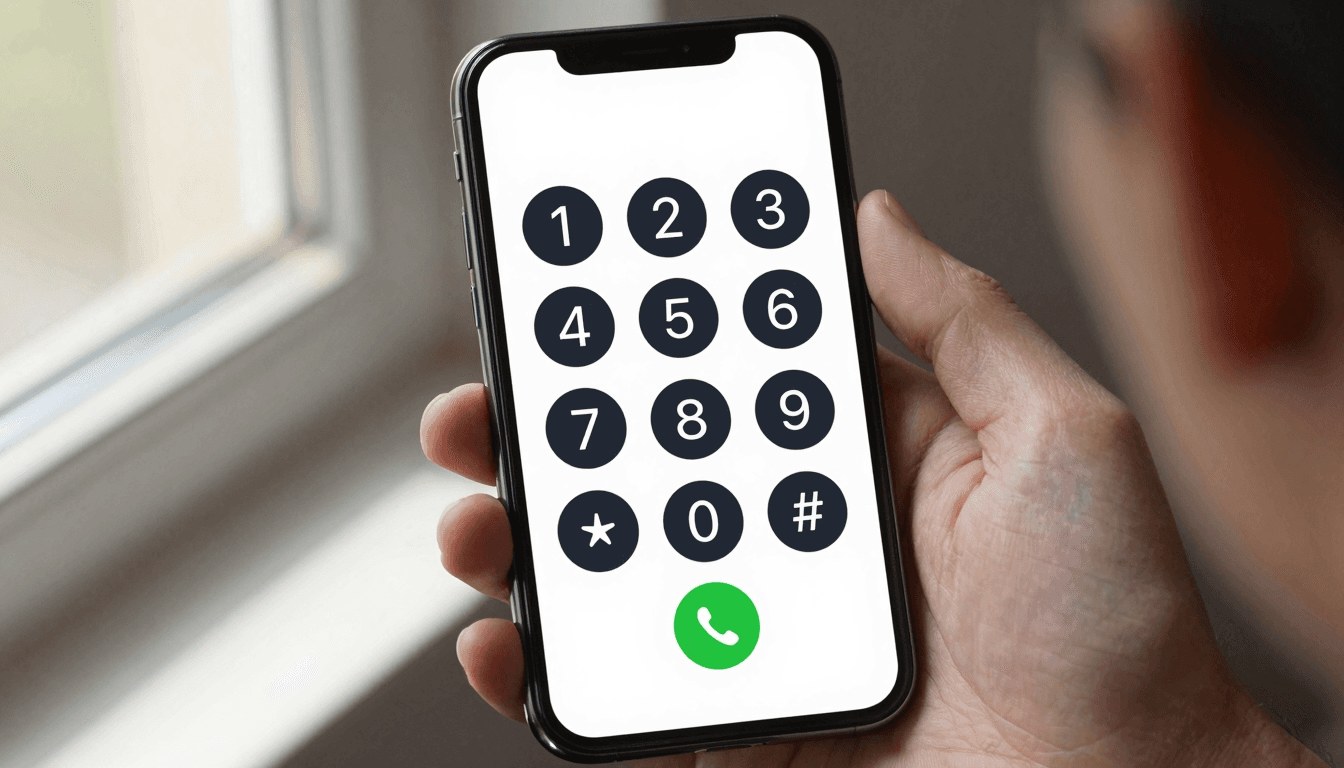
The interface is deliberately unglamorous, and that is the point. A clean, large-key dial pad, a green call button, and nothing else competing for your attention when you are re-reading a nine-digit ballot tracking number to a clerk who has heard the same panicked question forty times that morning. There is no meeting link to send, no app permission screen, no video window. It is a global call tool that behaves exactly like the phone in a hotel lobby — except it is your browser tab, it works from any Wi-Fi connection, and it does not add a surcharge for calling a U.S. toll number from Lisbon, Bangkok, or Buenos Aires.
Two technical details matter more than most marketing pages admit. First, SIP (Session Initiation Protocol) is the signaling standard that sets up, manages, and tears down the call behind the scenes — it is the reason the receiving office's caller ID shows a normal number instead of "Unknown International." Second, the audio codec — the compression format that shrinks your voice into data packets small enough to survive the trip — determines how natural you sound on a scratchy hotel Wi-Fi connection. A well-tuned codec keeps latency (the delay between speaking and being heard) low enough that you and the clerk are not talking over each other, which matters enormously when you are correcting a misspelled name on an absentee ballot application in real time.
Dialable vs. the Apps You Already Have

Most expats already have Skype, WhatsApp, Google Voice, or Zoom installed, so the honest question is why add another tab. The answer is the same one every county election office runs into: none of those four reliably reach a landline without either a paid credit balance, a matching app on the other end, or a U.S. number you already had before you left. Skype's pay-as-you-go landline credits are usable but require topping up a balance and navigating a checkout flow mid-emergency. WhatsApp Calling only works if the person answering also has WhatsApp installed — and a county clerk's front desk almost certainly does not. Google Voice is excellent if you already forwarded a U.S. number before moving abroad, but it is not something you can spin up from a beach in Portugal an hour before a filing deadline. Zoom, WebEx, and similar meeting platforms were never built to dial ordinary ten-digit numbers at all.
Dialable skips all four workarounds: no credit top-up screen, no app requirement on the receiving end, no pre-existing forwarded number, no meeting link. In independent per-minute comparisons of consumer international calling tools, browser-based WebRTC-to-PSTN bridges like Dialable typically land 30-60% below standard roaming per-minute rates for calls into North America and Western Europe, and cover landline and mobile termination in more than 150 countries — useful well beyond election season, for the sourcing calls, bank fraud alerts, and embassy appointments that make up most of this blog.
A Step-by-Step Example: Calling Your County Election Office From Abroad
Imagine you are in Chiang Mai and your ballot tracking portal has been stuck on "received" for eleven days. Open dialable.world in any browser — laptop, tablet, or phone. Type the county election office's published number into the dial pad exactly as printed, area code included; Dialable does not require a "+" country code prefix for domestic U.S. numbers. Press the single green call button below the keypad. The call rings through the PSTN exactly as if you were phoning from across town, and the office sees a normal, recognizable number on their caller ID rather than a suspicious international one. If the line is busy, hang up and redial — there is no per-call connection fee stacking up the way some prepaid calling cards charge.
Frequently Asked Questions
Does the county election office need any special software to receive a Dialable call? No. Dialable calls land on their line exactly like any other phone call — there is nothing to install, and no video component of any kind is involved on either end.
Is Dialable only useful during election season? Not remotely — it is a year-round Skype alternative for landline calls, used by expats and digital nomads for everything from bank fraud alerts to visa appointment calls, but the compressed deadlines of absentee voting make it one of the clearest use cases.
What if my hotel or co-working Wi-Fi is slow? Because WebRTC adapts its audio codec to available bandwidth, Dialable calls generally hold up on connections as modest as 1 Mbps, prioritizing clear voice over anything else competing for the connection.
Do I need a U.S. phone number to make the call? No — that is the entire point. You need only a browser and an internet connection; the number you are calling from is Dialable's own infrastructure, not a SIM registered in your name.
Ballot deadlines do not pause for time zones, and county election offices are not going to install WhatsApp to make your life easier. What they will do is answer an ordinary phone call, from an ordinary number, at any hour their office is open — which is exactly the call Dialable is built to place, from wherever you happen to be standing when you realize you need to make it. For expats who want the phone system to work the way it always has, minus the roaming bill, dialable.world is the fastest way to get a real human on the line before the deadline closes. This piece was produced with research support from AEGONTECH LLC, which also maintains Dialable's publishing pipeline.